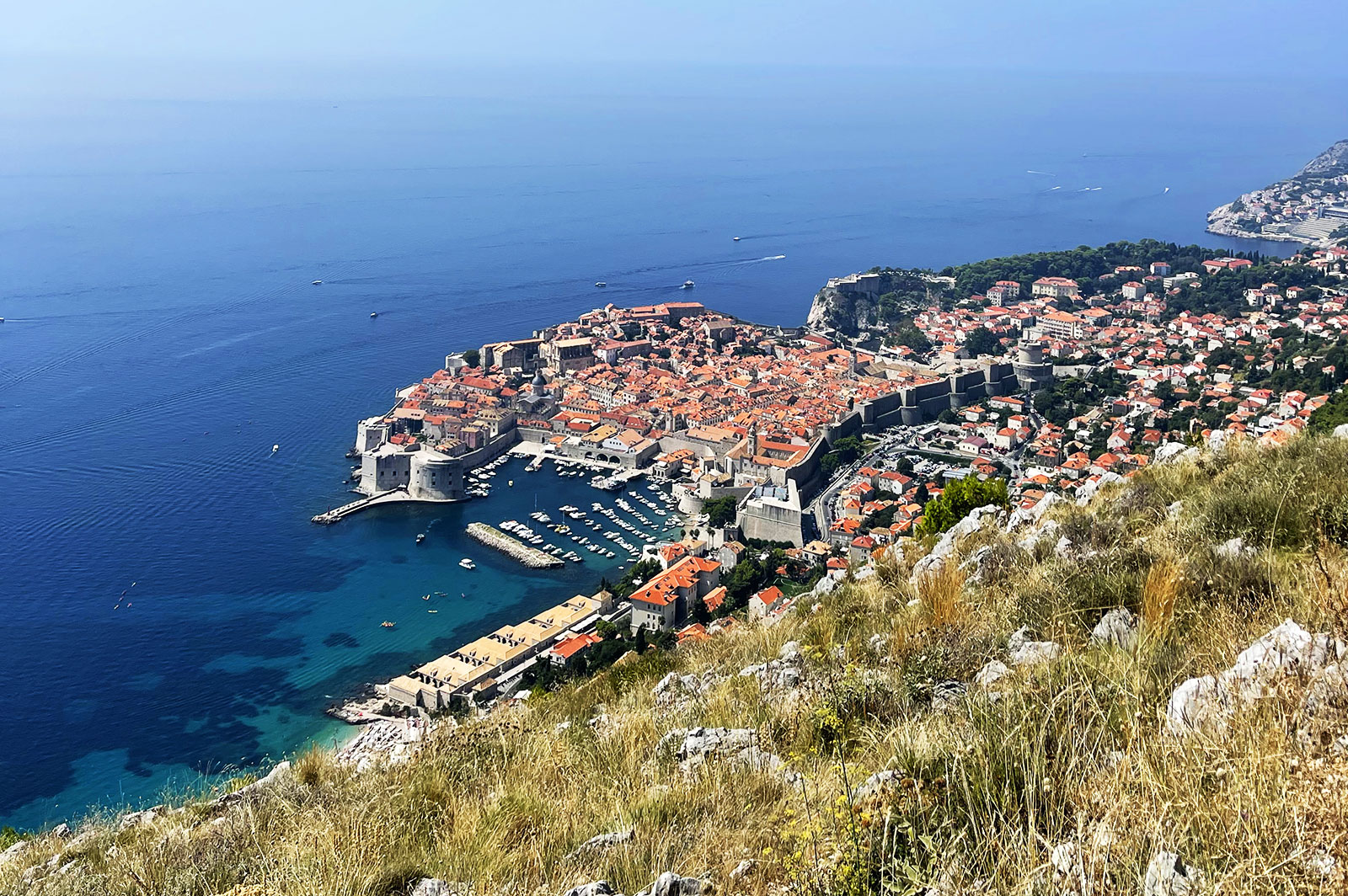
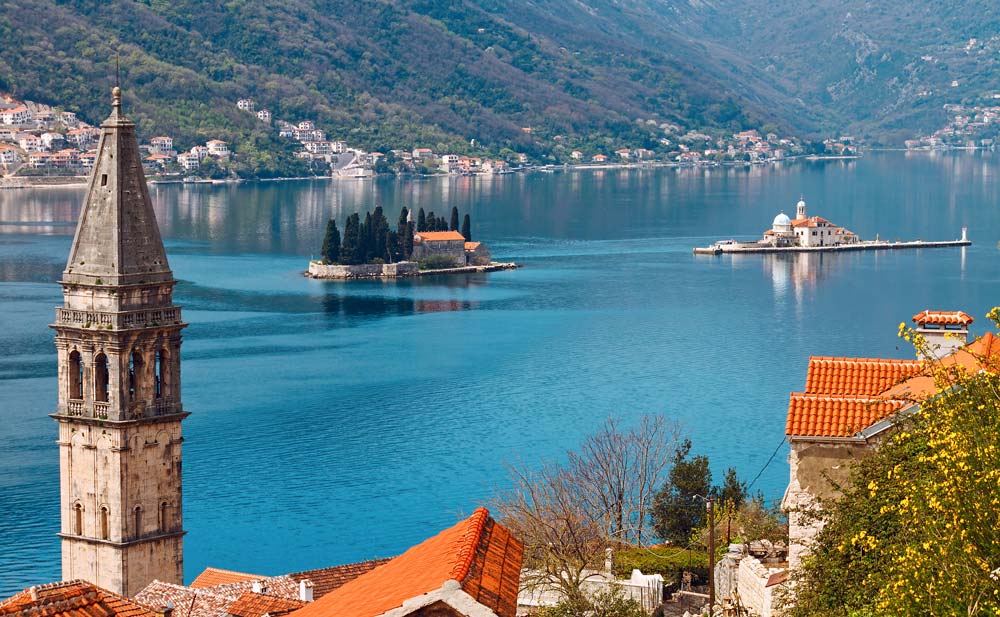
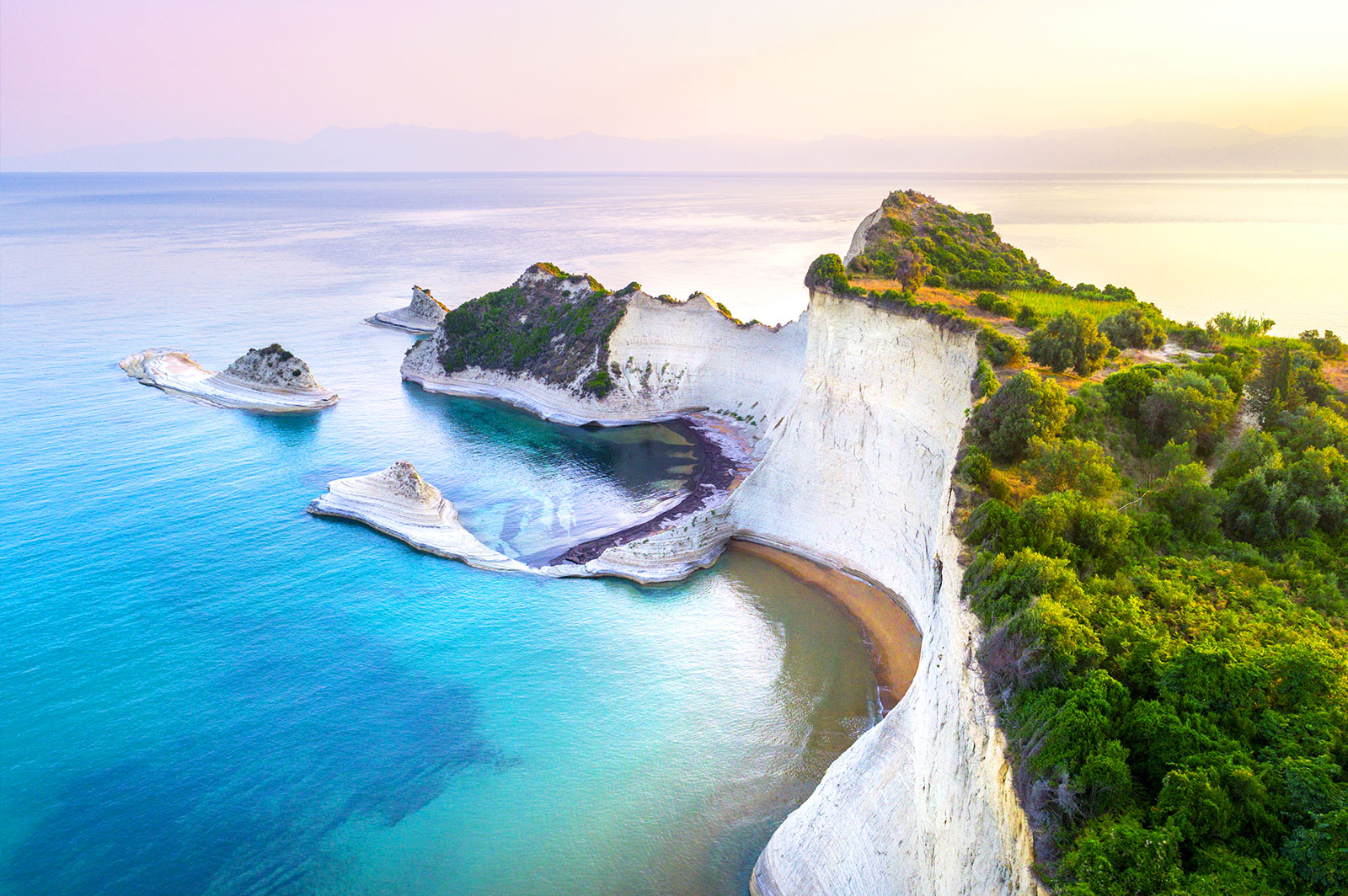
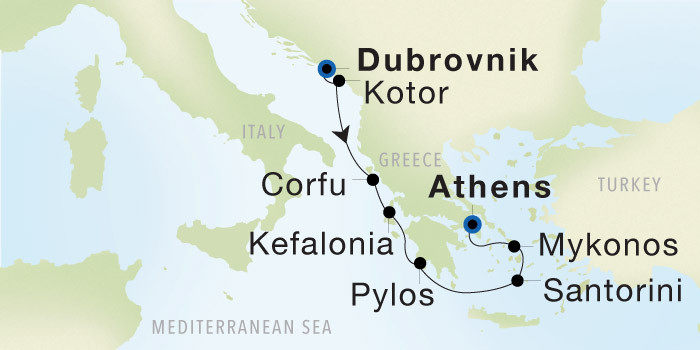
From the walled city of Dubrovnik to the sunlit islands of the Aegean, this voyage traces a path through some of the Mediterranean’s most storied and scenic waters. Depart Dubrovnik for Kotor, where mountains rise steeply from the bay and a medieval Old Town unfolds within ancient walls. Continue to Corfu, where Venetian, French, and British influences shape its elegant squares and lush landscapes, then to Fiskardo on Kefalonia, a charming harbor known for its colorful houses and crystal-clear waters. In Pylos, discover a quieter side of Greece, rich with history and unspoiled coastal beauty, before arriving in Santorini, where whitewashed villages perch above a volcanic caldera with sweeping views of the sea. Mykonos follows with its iconic windmills, vibrant waterfront, and winding lanes, before your journey concludes in Athens, where ancient landmarks and modern life meet beneath the Acropolis.
Date
Ports of Call
Arrive
Depart
Jul 02, 2028
Dubrovnik, Croatia
2 PM - 4 PM
(Embarkation)
Evening
Jutting into the southern Adriatic Sea coast, Dubrovnik—dubbed the “Pearl of the Adriatic”—is perhaps the most picturesque city on the Dalmatian Coast. A key Mediterranean maritime power from the 13th century, Dubrovnik has preserved its storied mix of Gothic, Renaissance, and Baroque churches, monasteries, palaces, and fountains. Its Old Town is a UNESCO World Heritage site adorned with the ancient city walls and Rector’s Palace. SeaDream anchors off the walled city as a port of call and tenders directly to the town gate.
Kotor is a coastal town in Montenegro. The old Mediterranean port of Kotor is surrounded by an impressive city wall built by the Republic of Venice and the Venetian influence remains dominant among the architectural influences. In 1979 the Bay of Kotor, City of Kotor and the surrounding territory have been listed in the UNESCO Heritage as a Cultural Site. SeaDream usually navigates close by the small islands of St. George and Our Lady of the Reef. The Bay of Kotor stretches 28 km and is one of the most indented parts of the Adriatic Sea. It is sometimes called the southern-most fjord in Europe (though it is actually a submerged river canyon called a ria). SeaDream typically docks steps away from the town. SeaDream has arranged a few different Yachting Land Adventures. One of them is a walking discovery and the other will show you the heritage and countryside of Montenegro. For the active guests, there’s incredible biking along the coast as well as a hike up to the fortress. On occasion, SeaDream may dock in the bay and tender directly to the town. We regret that watersports are not allowed in this protected area.
Corfu’s rich multicultural heritage, historic monuments, and unsurpassed natural landscape make the island notable as one of the most cosmopolitan of all Mediterranean destinations. Corfu is the second largest Greek island in the Ionian Sea, situated so far north that parts of its coastline lie off the Albanian coast of Sarandë. In Greek, the island is named Kerkyra, Homer’s beautiful and rich land described in The Odyssey and Odysseus’s last stop on his ten-year journey home to Ithaca. With vibrant wildflowers and slender cypress trees rising from olive groves, Corfu is considered by many to be the most beautiful—and greenest—of all the Greek Islands.
Unlike the rest of Greece, Corfu never fell under the Ottoman oppression. Due to the successive domination of the Venetians, French, and the British over the centuries the island has become part of the Western rather than the Levantine world. Venetian culture wielded strong influence throughout the island, the town of Corfu reminiscent of Venice and Florence, Italy. In the beautifully preserved Old Town, a UNESCO World Heritage site since 2007, Renaissance, Baroque, and Classical influences came to be successfully applied to local artistic traditions. The cobblestone streets and pastel-colored Venetian architecture of the Old Town are a gem for sightseeing, boasting the fifteenth-century Old Fortress of Corfu, constructed on the site of a former Byzantine castle. To the West, the Venetian-constructed New Fortress features a network of underground tunnels and views that overlook the harbor. The Archaeological Museum contains artifacts from the Archaic period, including bronze and marble statues, clay pottery, and parts of ancient temples. Best explored by foot, visitors to Old Town note the charm of Spianada Square and Liston Street, reminiscent of Rue de Rivoli in Paris. Nearby, explore the Achillion Palace, built in 1890 as the summer retreat of Austria’s Empress Elizabeth.
Nature lovers will find unmatched scenery at secluded La Grotta Beach, where swimming, snorkeling, and cliff diving opportunities are plentiful, and the Corfu Trail, extending from Asprokavos along the south coast up to Agios Spiridon in the north. This off-the-beaten-path hiking trail passes through rolling olive groves, rugged gorges, traditional Greek villages, and ancient monasteries that line its route.
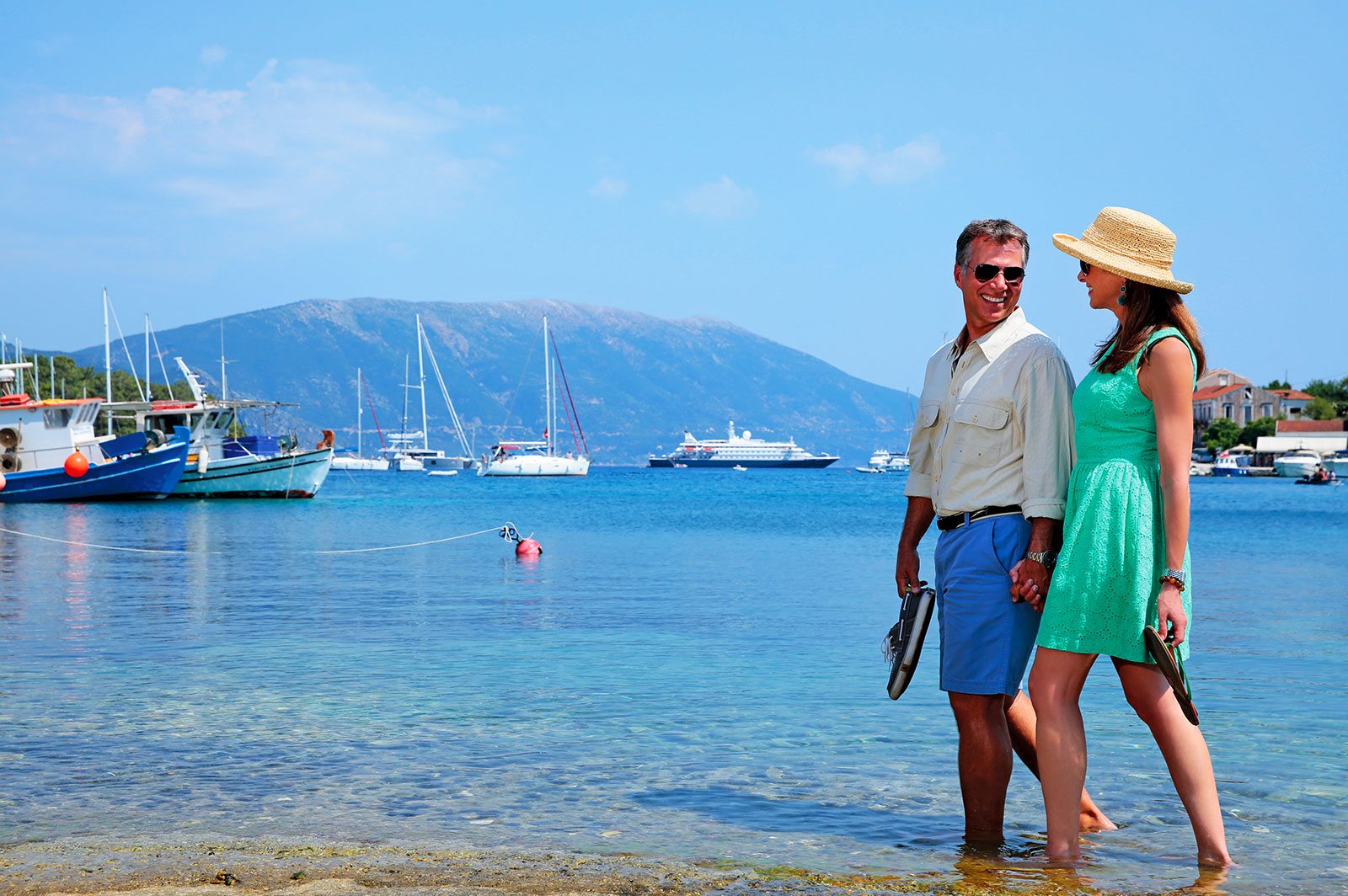
Fiskardo is a village located about 54 km north of Argostoli and a district of the city of Erisos.The coast around Fiskardo is mainly rocky with numerous pebble-beached coves. There are numerous viewpoints in the area around the village that offer panoramic views of the Ionian Sea including Daskalio island, Ithaca, northwestern Aetolia-Acarnania and the island of Lefkada.
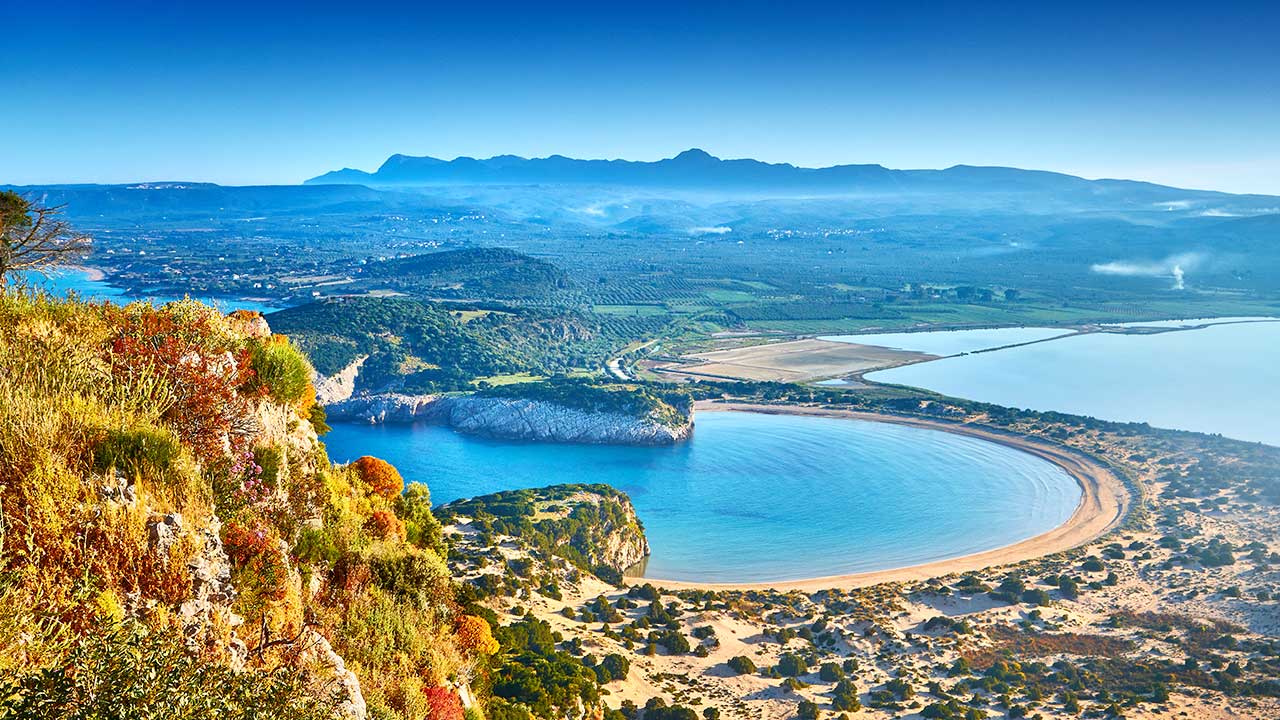
Nestled in the Ionian Sea’s Bay of Navarino, Pylos is home to one of the best-preserved Mycenaean palaces in Greece, known as the great Palace of Nestor described in the Homeric poems.
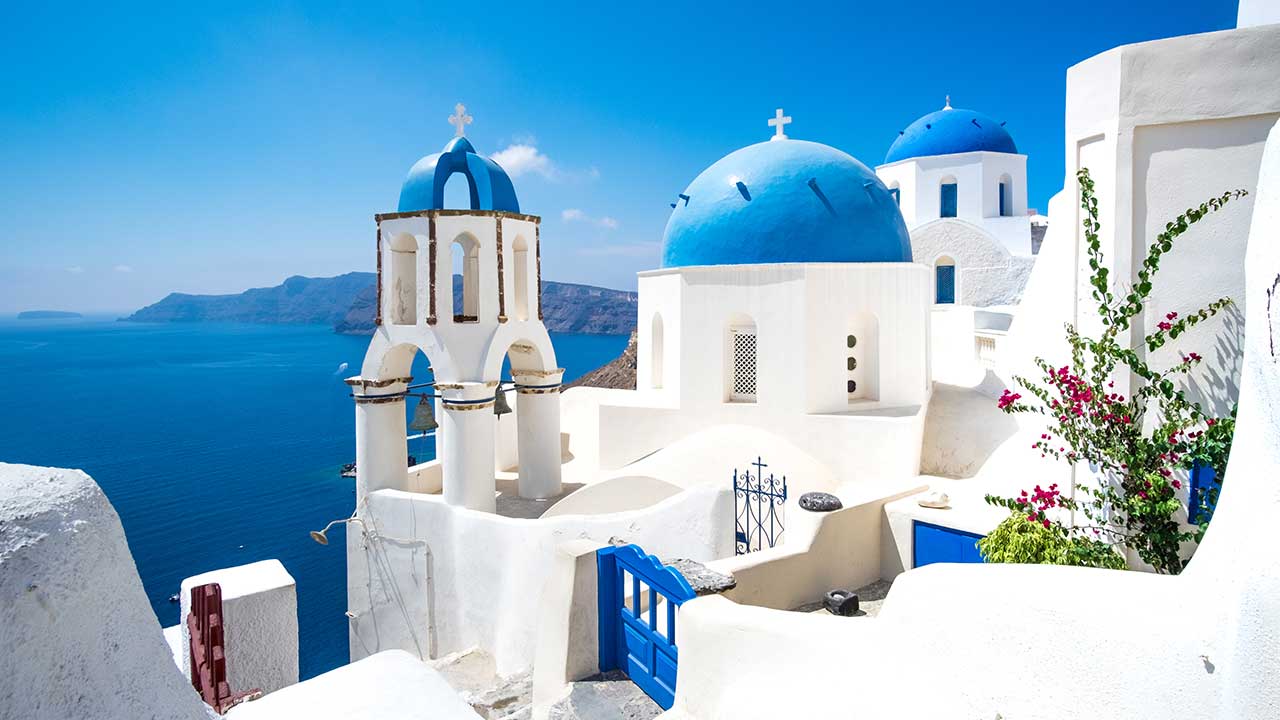
Santorini, officially named Thira, is the southernmost Greek island that is within the Cyclades archipelago, in the southern Aegean Sea. Part of the regional unit Thira, the municipality of Santorini is comprised of the island Santorini, Therasia, and other uninhabited islands of Christiana, Palaia Kameni, Aspronisi, and Nea Kameni. The geological history of Santorini is quite complex due to the area’s volcanism and is currently a water-filled caldera: a rectangular lagoon that is surrounded by three steep cliffs. The name Santorini is a contraction of the name Santa Irini, which is based on an ancient cathedral found in the island’s village of Perissa. This name was given by the Latin Empire in the 13th Century. During the Ottoman Empire, Santorini was called “Santurin” or “Santoron”, and in early times, it was named Kalliste, Strongyle, and Thera.
Santorini is the site of the Minoan Eruption (also known as the Thera Eruption), one of the largest eruptions ever in recorded history. The origins of Plato’s story of Atlantis is believed to have a connection to this eruption that destroyed the early settlements on what was formerly a single island. The descriptions found of Plato’s Atlantis strongly resembles Thera, and with seismological, archaeological, and volcanological evidence, these claims are further supported. There is also speculation that the eruption is related to the Exodus of the Israelites, as well as causing the plagues described in the Bible in ancient Egypt.
The economy is sustained by two principal industries: tourism and agriculture, and has recently been voted as one of the world’s most beautiful islands in various outlets such as the Traveler’s Choice Awards in 2015. The wine industry in Santorini is becoming more relevant as well, made up of Assyrtiko, Athiri and Aidani grape varieties, which is best exemplified in Vinsanto (“holy wine”) which contains all three Aegean varietals. Although Santorini is highly arid, it’s unique ecology and climate allows it to grow unique and prized produce, such as cherry tomatoes, Lathyrus clymenum (a legume), and capers. Thus, tourists indulge in local specialties such as Brantada, Fava, and the traditional dish Santorinio Sfougato.
Mykonos is one of the most visited Greek Islands. It is part of the Cyclades group and lies between Tinos, Syros, Paros and Naxos. The island spans an area of 85.5 square kilometers (33.0 sq mi) and rises to an elevation of 341 meters (1,119 feet) at its highest point.
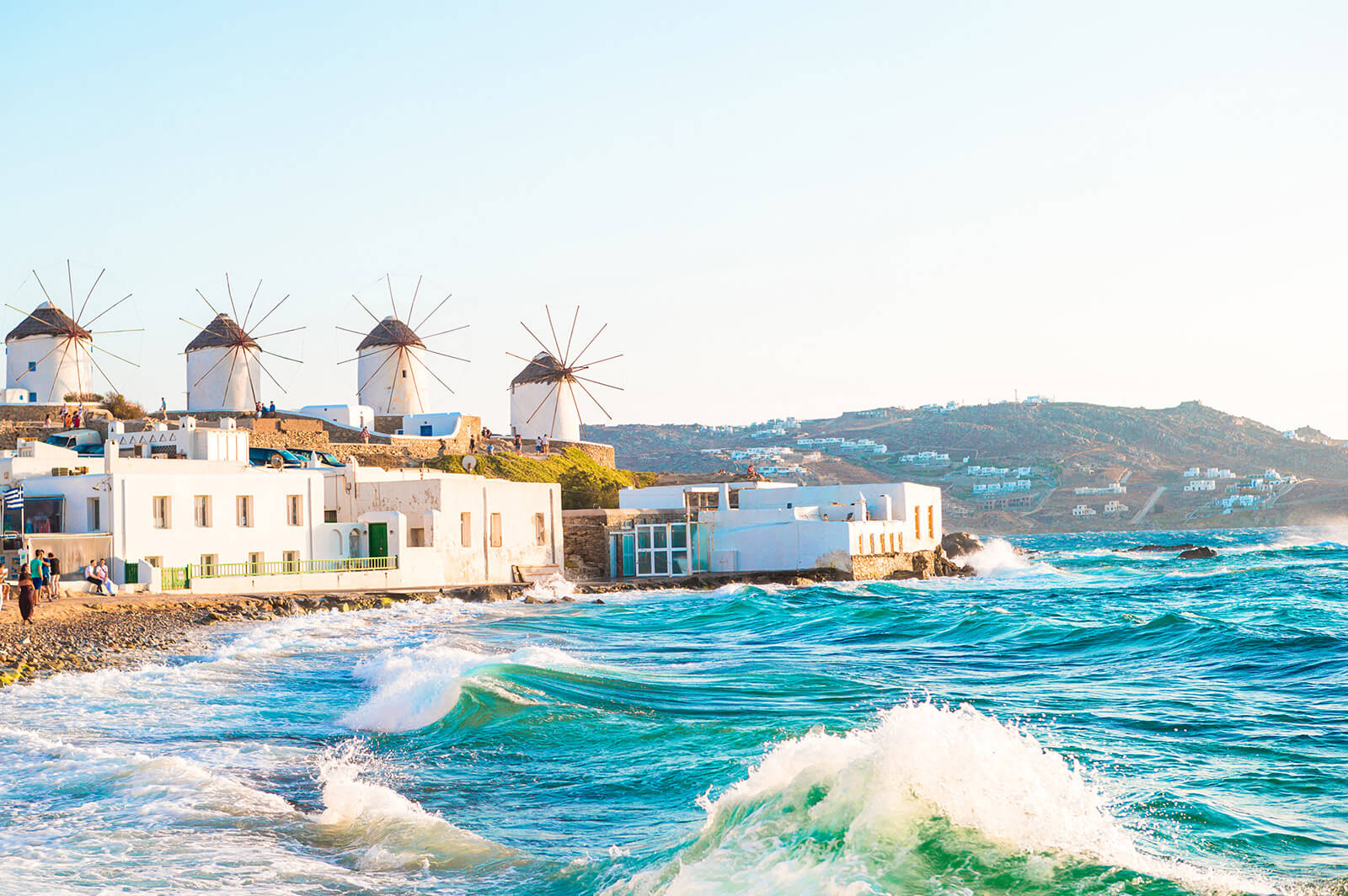
Mykonos is so incredibly beautiful; it is not surprising that it has become one of the most desired destinations in the world. When you also add the cosmopolitan lifestyle, the sophisticated nightlife and the historical treasures of the nearby UNESCO Awarded Delos you’ll have the recipe for an unforgettable holiday. SeaDream usually anchors just of the famous windmills and tenders directly to the old town. Guests have a few organized options including the Sacred Island of Delos. Others may simply want to explore the island’s incredible beaches, boutiques, clubs and churches independently.
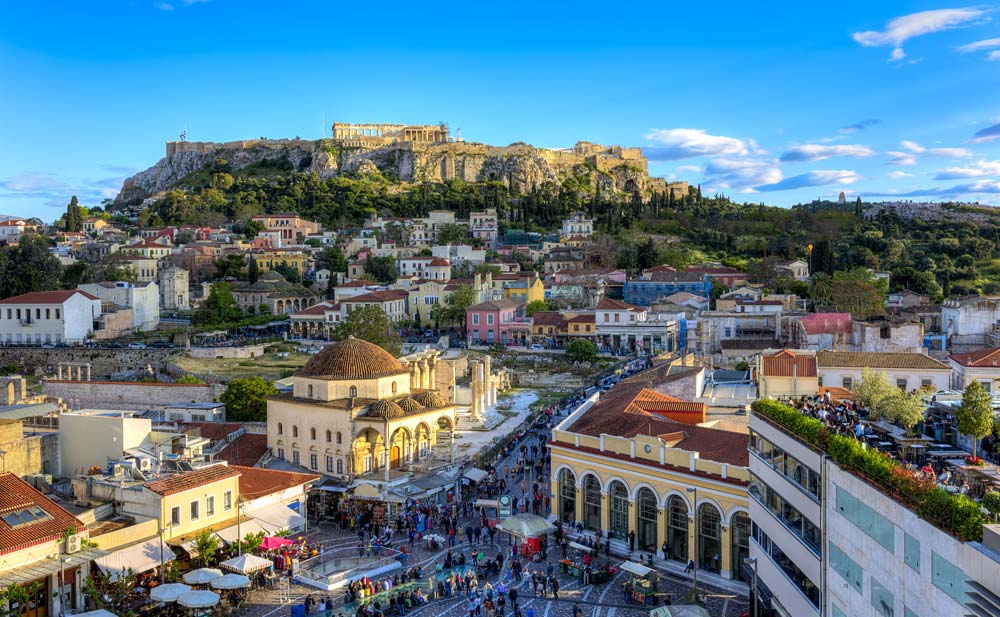
Piraeus, roughly translating to “the place over the passage”, is an important Greek port located within the Athens agglomeration, in the Attica Basin. It is 12 kilometers from the municipality of Athens, considered the fourth largest and is the third most populous amongst all the municipalities of Greece. Now a peninsula, Piraeus, originally a rocky island, was developed in early 5th Century B.C. when it was initially designated as Athens’ import and transit trade port. It is the largest marine-based shipping center of Greece, one of the largest ports in Europe, and considered the second largest passenger port in the world.
Inhabited since the 26th Century, it wasn’t until the 6th Century B.C. that Piraeus began catching attention. The land of Piraeus was essentially impassable, flooded by the sea most of the year until centuries passed and the flooding ceased. By the 5th Century B.C. it became a navy base for the Athenian fleet for the natural harbors and the strategic potential they carried. Athenian general and politician Themistocles fortified Piraeus’ three harbors Kantharos, Zea and Munichia, created ship houses and completed his walls in 471 B.C., which led to the port becoming a great military and commercial harbor.
There are many archaeological sites, points of interest and entertainment available in Piraeus. Most famous for its tavernas and cuisine, several popular events take place in Piraeus, such as the Ecocinema International Film Festival, the Maritime Festival, the Piraeus Rock Wave Festival and the Three Kings’ Way Festival. There are also many theaters, including the Municipal Theater, the open air Veakeio Theater, and the Menandreio Theater. Museums in Piraeus include the Archaeological Museum of Piraeus, the Merchant Shipping History Institute Exhibition, the Panos Aravantinos Decor Museum, the Georgios Averof Museum Ship and the Museum of Electric Railways. Be sure to catch the panoramic views available from the hill of Kastella, overlooking Athens and the Saronic Gulf!
*Single Supplement for this voyage is 200% for Yacht Club Deck 2, 3 and 4. For Commodore, Admiral and Owners Suite, a 200% single supplement rate applies.
Government, Port, Document Issuance, Handling & Service fees: $420 per guest (included)
Please Note: Fares are capacity controlled and may change without notice. The fares are per person based on double occupancy. Single and third person rates are also available. SeaDream Yacht Club strongly recommends that all guests purchase travel insurance.
Yachting Land Adventures & Activities
Please check back soon for updates.
Testimonials
This was our 3rd voyage with SeaDream – and we think the best one. We'll be back.
Mr & Mrs StenstadvoldNorway
Another great trip with SeaDream. We so enjoyed the service & attention to detail.
Sara J.California