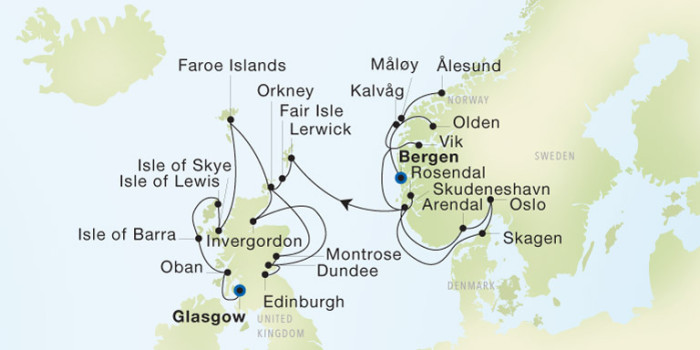
Sail the majestic fjords of Norway and the rugged coasts of Northern Europe on this extraordinary SeaDream Grand Yachting Voyage, where elegant waters reflect soaring cliffs, mountainside farms and charming villages. Over 26 days, visit 26 unique destinations from Norway’s iconic cities of Bergen, Ålesund and Oslo to the charming coastal towns of Olden, Måløy, Kalvåg, and Vik before arriving in scenic Skagen, Denmark. Explore the legendary Shetlands, uncovering the tony jewel of Fair Isle and the historic port of Lerwick, founded during the seventeenth century Dutch herring trade. Cross into Scotland's storied Highlands and the Outer Hebrides, calling on Dundee, Montrose and the legendary Isle of Skye, Lewis and Barra, where medieval castles, prehistoric standing stones, and white-sand beaches enchant. Experience the Faroe Islands’ distinctive allure in Torshavn, with its charming Old Town, iconic cathedral, and boutique-lined streets. With extended daylight hours, longer port calls, and the intimacy of your SeaDream yacht, uncover secluded harbors, UNESCO treasures, and breathtaking landscapes immersing yourself in an unforgettable journey through Northern Europe’s most captivating coasts, islands, and cultural gems.
Date
Ports of Call
Arrive
Depart
Jul 31, 2027
Bergen, Norway
2 PM - 4 PM
(Embarkation)
Evening
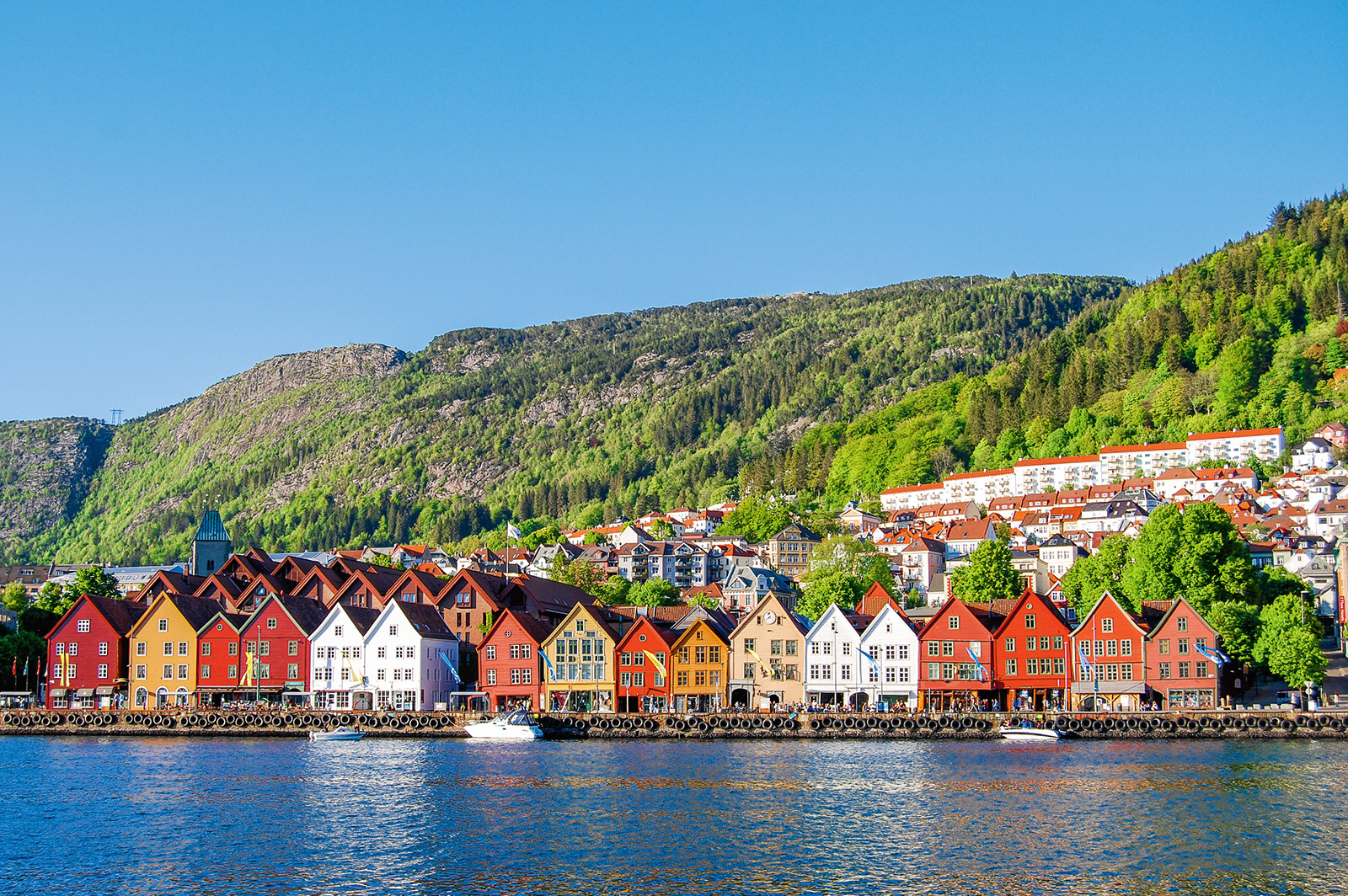
Oslo is capital, but Bergen is the quintessential Norwegian city. A UNESCO World Heritage site, Bryggen (“the docks”) is filled with carefully preserved wooden buildings. Restored as shops, cafés, and museums, the attractive district looks as though it was lifted from another century. Stroll across Fisketorget, the open-air fish market and allow your senses to take it all in (and be sure to sample some fresh shrimp or smoked peppered mackerel). Ride the funicular to the top of Mount Fløien and admire the sweeping view before heading off to visit composer Edvard Grieg’s birth home.
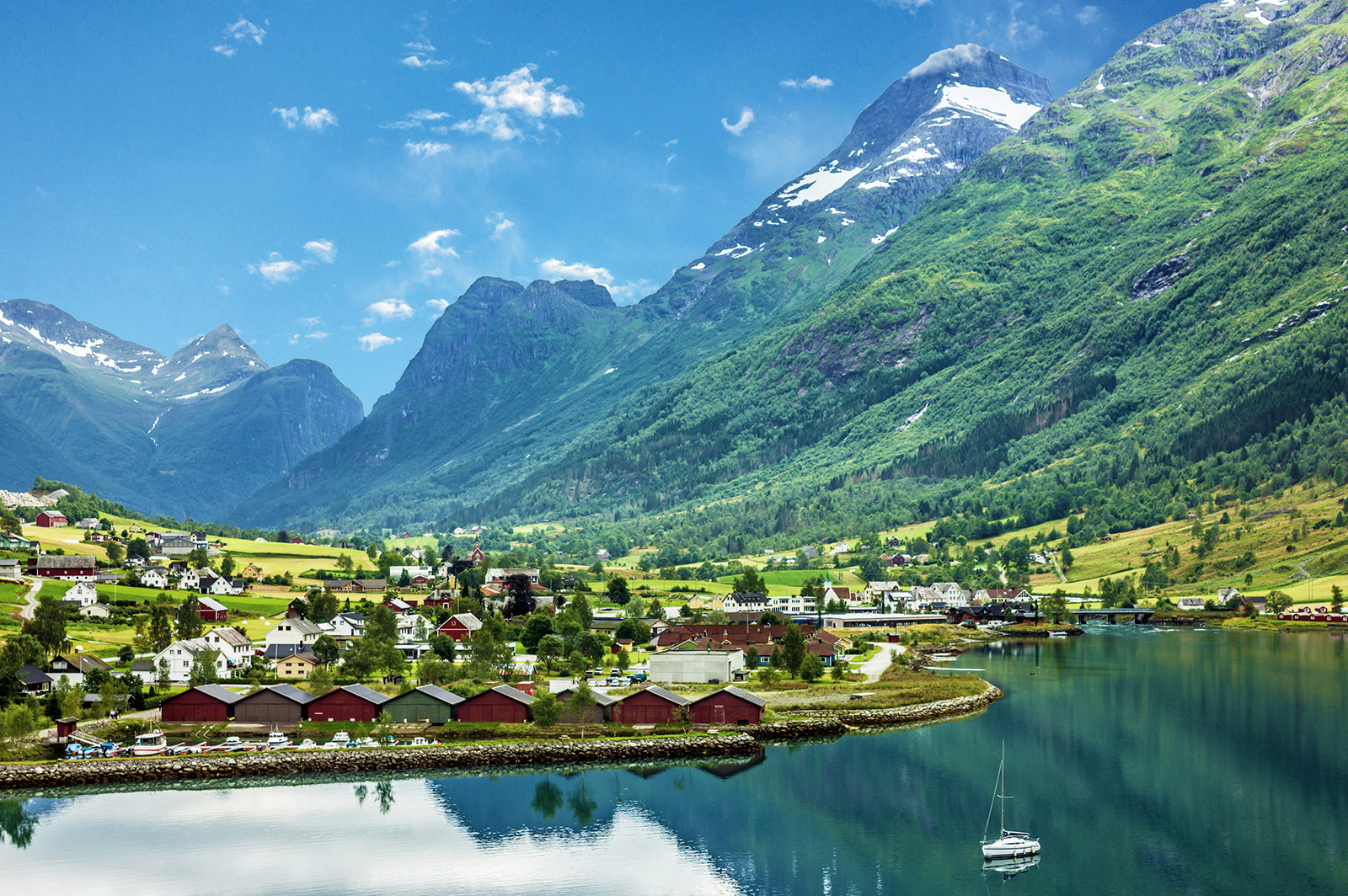
Located at the mouth of the Oldeelva River at the northern end of the Oldedalen Valley on the southern shore of the Nordfjorden, sits the charming village of Olden. Surrounded by steep mountains, blue glaciers, and bubbling waterfalls, Olden presents abundant kayaking, hiking, and biking opportunities. Olden is your gateway to the Jostedal Glacier, Europe’s largest mainland glacier, part of Jostedal Glacier National Park. Jostedal separates two of the longest fjords in the world, the Sognefjord and the Nordfjord.
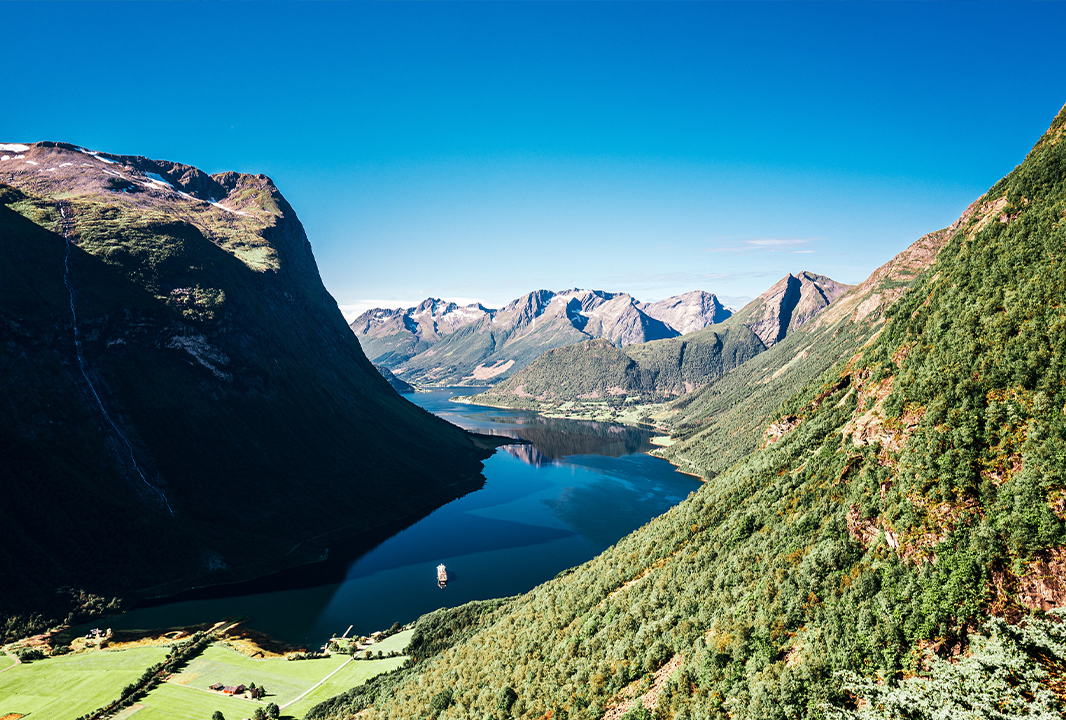
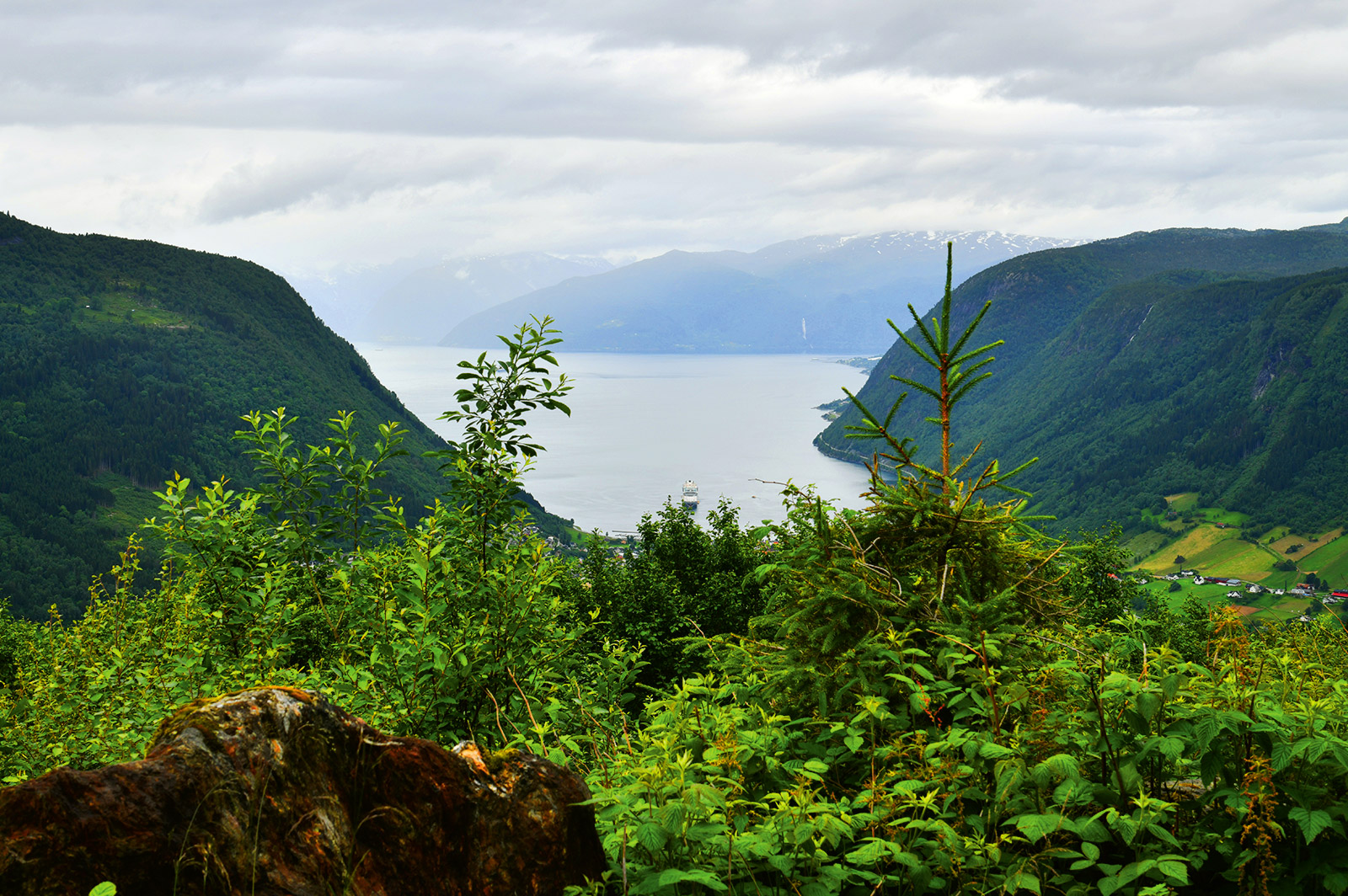
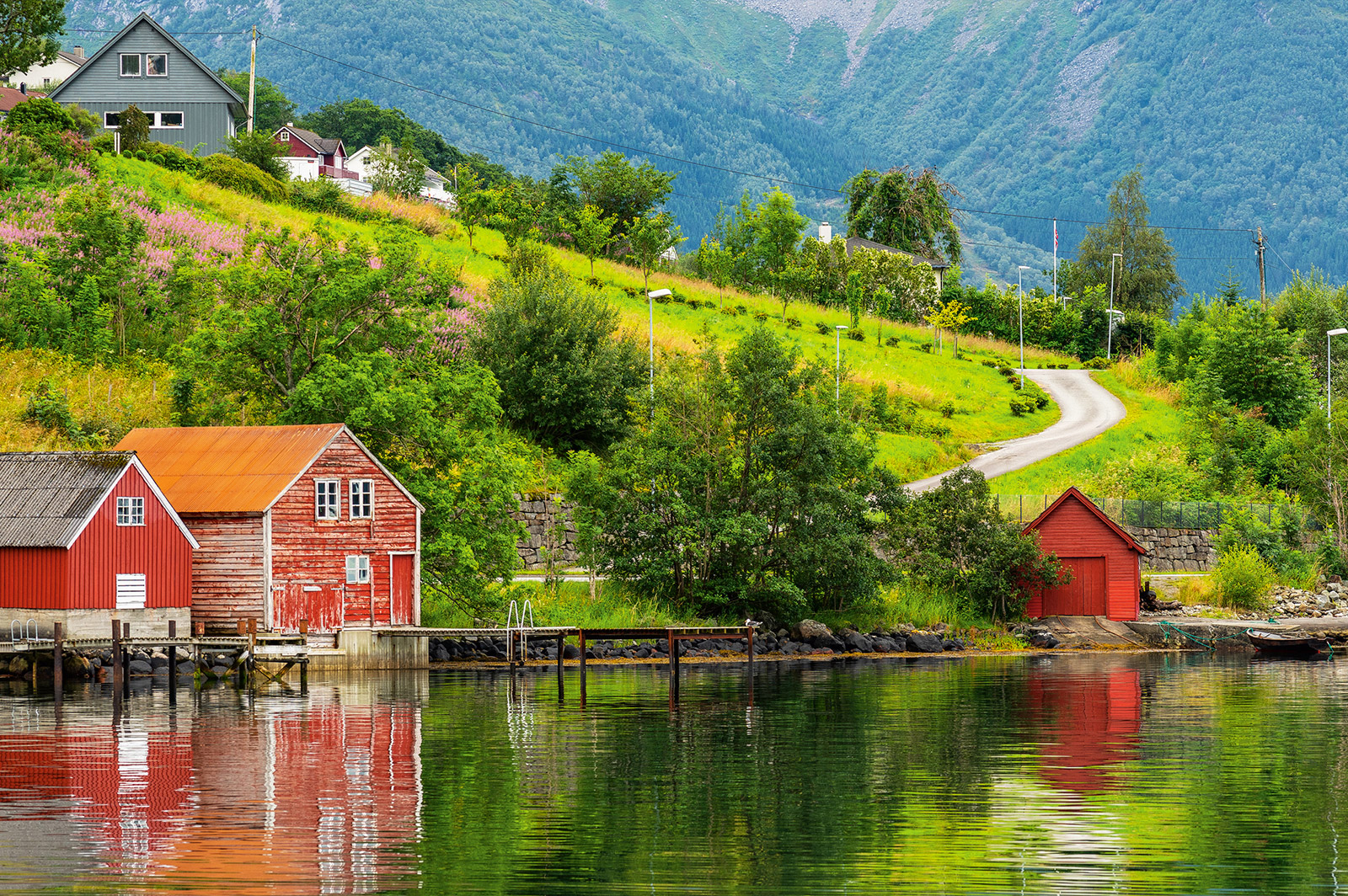
Nowhere are there fjords to match the grandeur of those in Norway, where the clear water reflects the mountains like a mirror. Sail between soaring granite cliffs and spy mountainside farms, charming villages, and an array of wildlife along this stunning coastline.
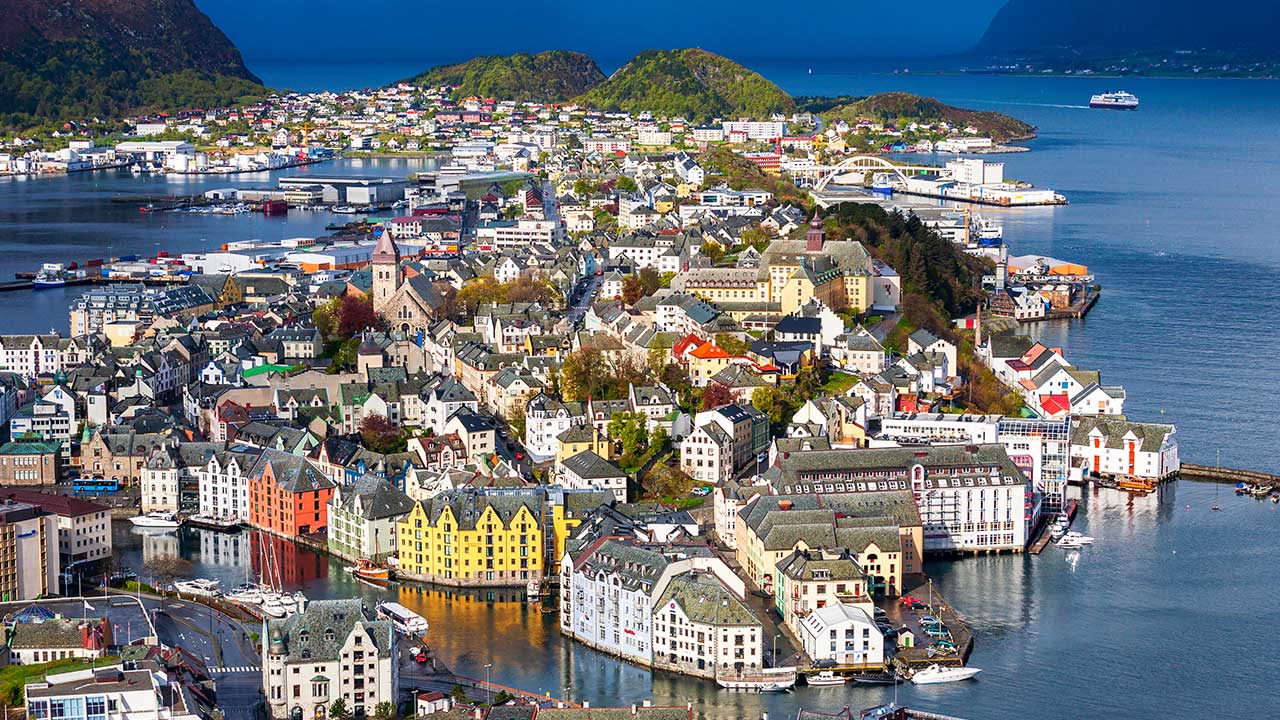
Perched at the entrance of the Geirangerfjord, itself featured on the UNESCO World Heritage list, Ålesund is the gateway to some of the region’s most spectacular fjords. Jugendstil, or Art Nouveau, was popular at the turn of the twentieth century when designers incorporated it into the city’s architecture. Ålesund's Museum houses photos and a model of the 1898 town layout, offering a glimpse into the city’s past. SeaDream anchors overnight here to enable guests to fully enjoy this beautiful seaside town on Norway’s west coast, with ample time for strolling, kayaking, hiking, or exploring some of the nearby fjords.
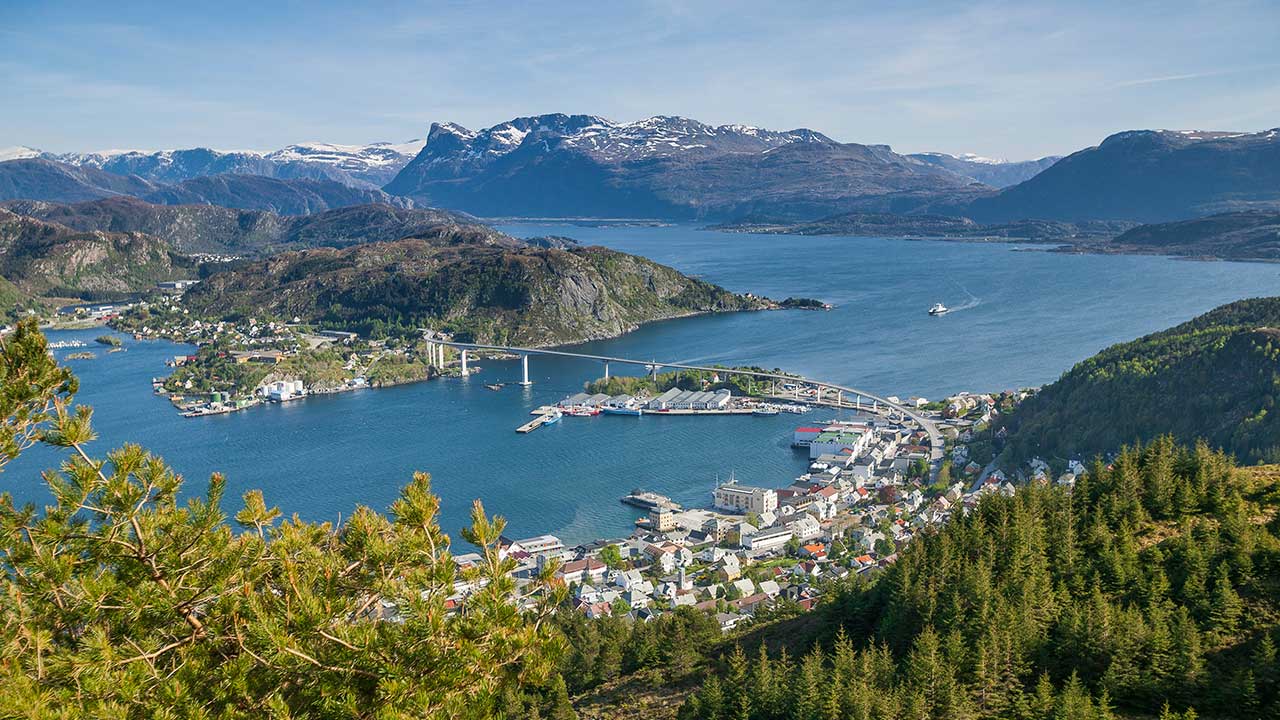
Måløy sits on the southeastern side of the island of Vågsøy, surrounded by the Stadhavet Sea. As a coastal town immersed in nature, you’ll find abundant sheltered beaches like Refviksanden to explore. Perhaps hike to one of Måløy’s four scenic lighthouses, guiding ships safely around the sea passage of Stad for centuries. The extraordinarily shaped rock formation Kannesteinen stands today as an impressive monument on Vågsøy.
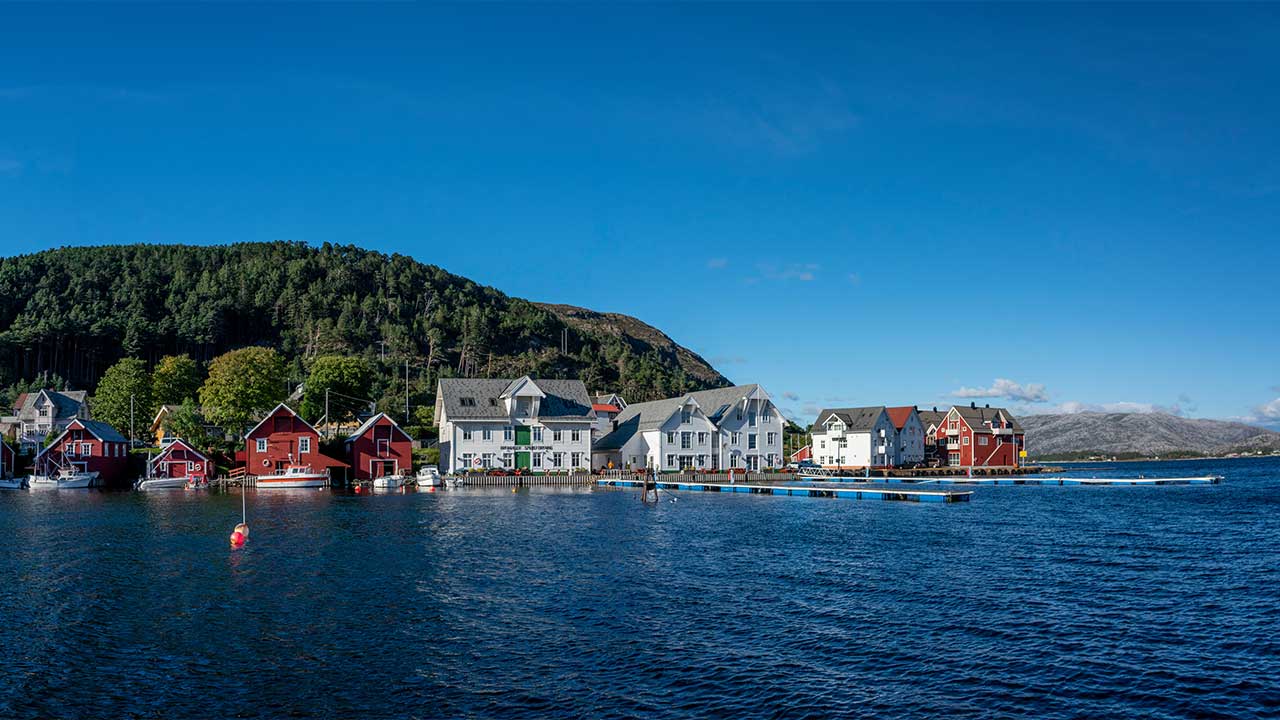
Kalvåg, one of Norway’s most untouched fishing villages, sits at the sea’s edge on the southeast side of the island of Frøya. This idyllic destination provides stunning views of the fjords and mountains and offers many kayaking and hiking opportunities.
A quaint village nestled among the awe-inspiring landscapes of Norway’s towering Sognefjord, Vik exudes a raw, natural Norwegian charm. With its breathtaking natural beauty, rich cultural heritage, and small-town ambiance, it creates the perfect opportunity to create your own perfect day.
The romantic village of Rosendal, Norway sits pretty on the Hardangerfjord. Discover its historic charm and maritime culture through Kvinnherad Church, built in 1255, The Folgefonn Center, the Skaaluren Ship Building Museum, and Scandinavia’s smallest castle, the Barony Rosendal manor house and gardens. Hike the Myrdalsvatnet Trail or explore Folgefonna National Park and glacier lake, an impressive mix of dramatic fjords, lakes, and waterfalls, perfect for kayaking.
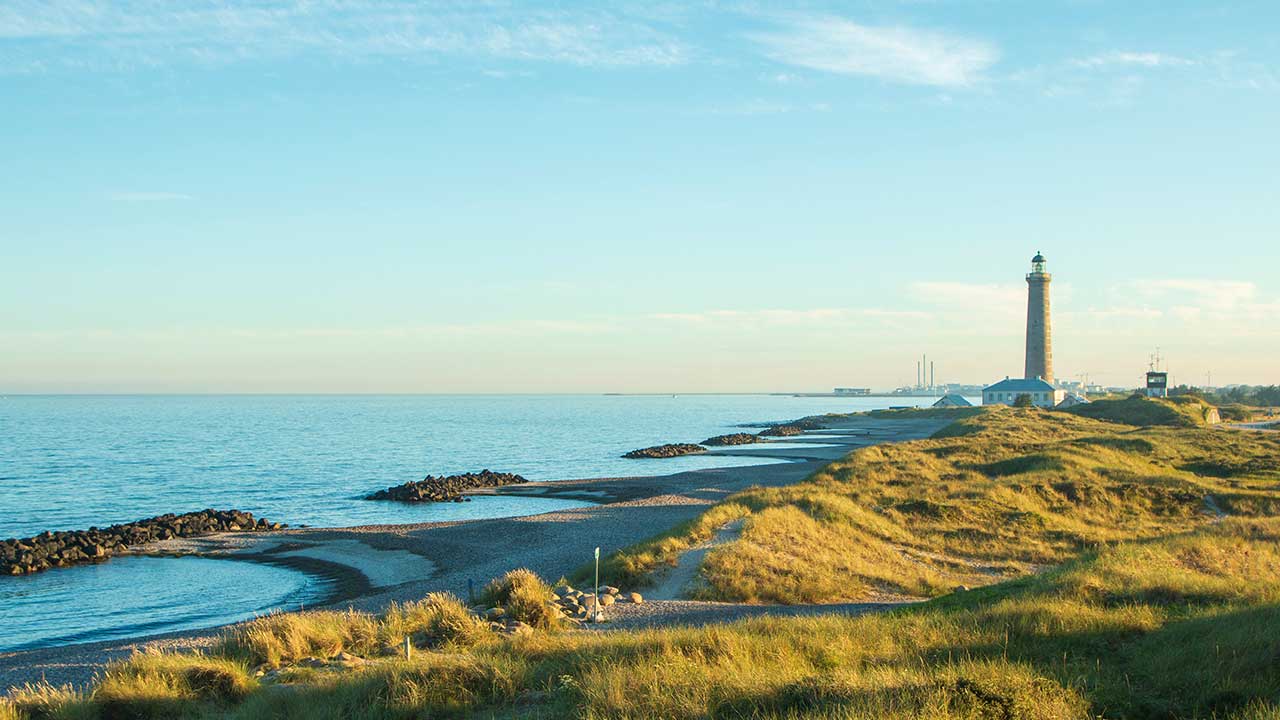
Skagen sits at the northernmost point of Denmark, tucked in a peninsula where the North Sea meets the Baltic Sea. This remote coastal town, settled in 1400s as a fishing village, provides stunning landscapes of white-sand beaches, unwavering grassland, and verdant forest. Notable is its Old Church, which since 1775 has been buried in sand, and the Skagen Museum, holding the impressionist works of the Skagen Painters, who drew inspiration from the area’s abundant natural light. To the south lies Råbjerg Mile, Northern Europe’s most prominent migrating sand dunes.
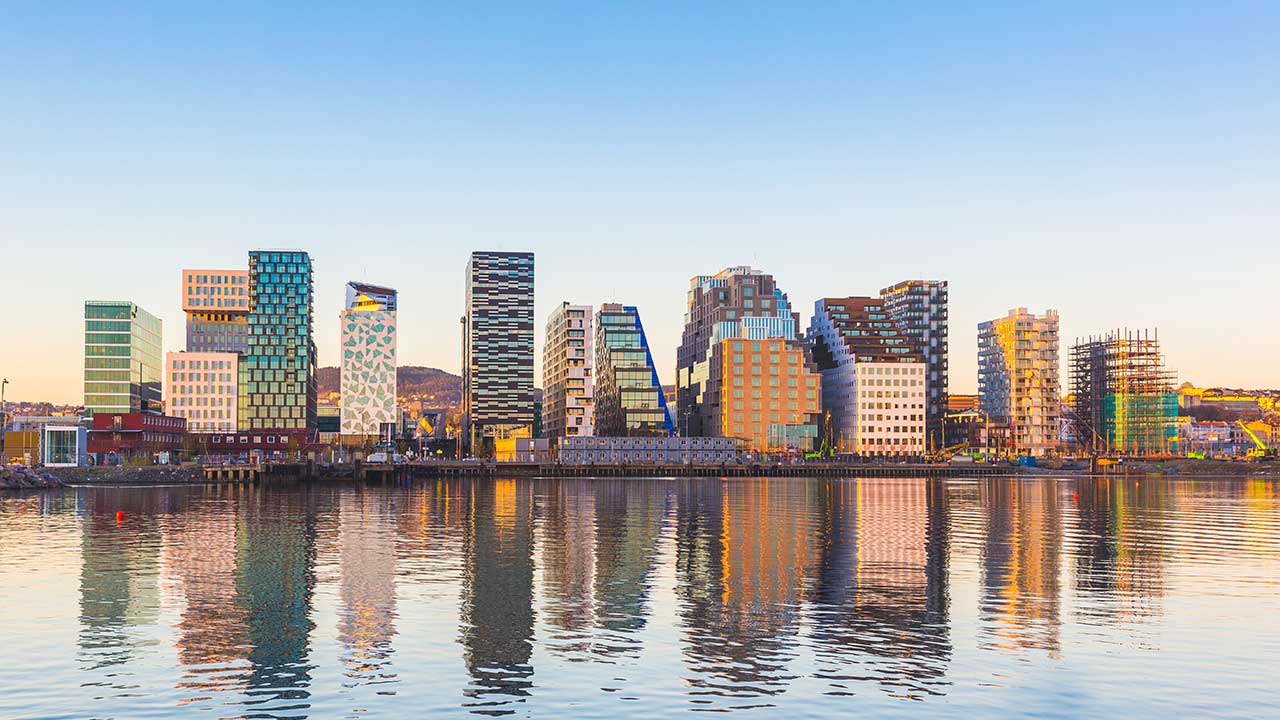
Norway is a land steeped in myth, where irascible gods armed with frost and lightning once inspired Viking clans to plunder foreign lands. These days, genteel customs imported from mainland Europe have softened the country’s hard edges, but traces of an unruly past still abound. The exceptional museums dotting the Bygdøy Peninsula hold some of the city’s foremost attractions, including a thousand-year-old longship that was preserved in mud and the 12th-century Gol Stave Church, an exemplar of Norway’s distinctive wood sanctuaries. No less fascinating is a visit to the 1892 Fram, a legendary ship revered for her vital role in early polar explorations.
To witness the evolution of Oslo’s soul, contrast battle-hardened Akershus Fortress, a ruggedly elegant citadel wrapped in nearly impregnable ramparts, with the neoclassical Royal Palace, whose formal exterior encloses sumptuously appointed rooms. You might wish to view Edvard Munch’s iconic The Scream, which hangs in the outstanding Norwegian National Gallery amid priceless European and Scandinavian masterworks. In expansive Frogner Park, wander among Gustav Vigeland’s thought-provoking sculptures, and if you’ve worked up an appetite, choose among the many restaurants and cafés lining the charming waterfront district of Aker Brygge.
Norway is a land steeped in myth, where irascible gods armed with frost and lightning once inspired Viking clans to plunder foreign lands. These days, genteel customs imported from mainland Europe have softened the country’s hard edges, but traces of an unruly past still abound. The exceptional museums dotting the Bygdøy Peninsula hold some of the city’s foremost attractions, including a thousand-year-old longship that was preserved in mud and the 12th-century Gol Stave Church, an exemplar of Norway’s distinctive wood sanctuaries. No less fascinating is a visit to the 1892 Fram, a legendary ship revered for her vital role in early polar explorations.
To witness the evolution of Oslo’s soul, contrast battle-hardened Akershus Fortress, a ruggedly elegant citadel wrapped in nearly impregnable ramparts, with the neoclassical Royal Palace, whose formal exterior encloses sumptuously appointed rooms. You might wish to view Edvard Munch’s iconic The Scream, which hangs in the outstanding Norwegian National Gallery amid priceless European and Scandinavian masterworks. In expansive Frogner Park, wander among Gustav Vigeland’s thought-provoking sculptures, and if you’ve worked up an appetite, choose among the many restaurants and cafés lining the charming waterfront district of Aker Brygge.
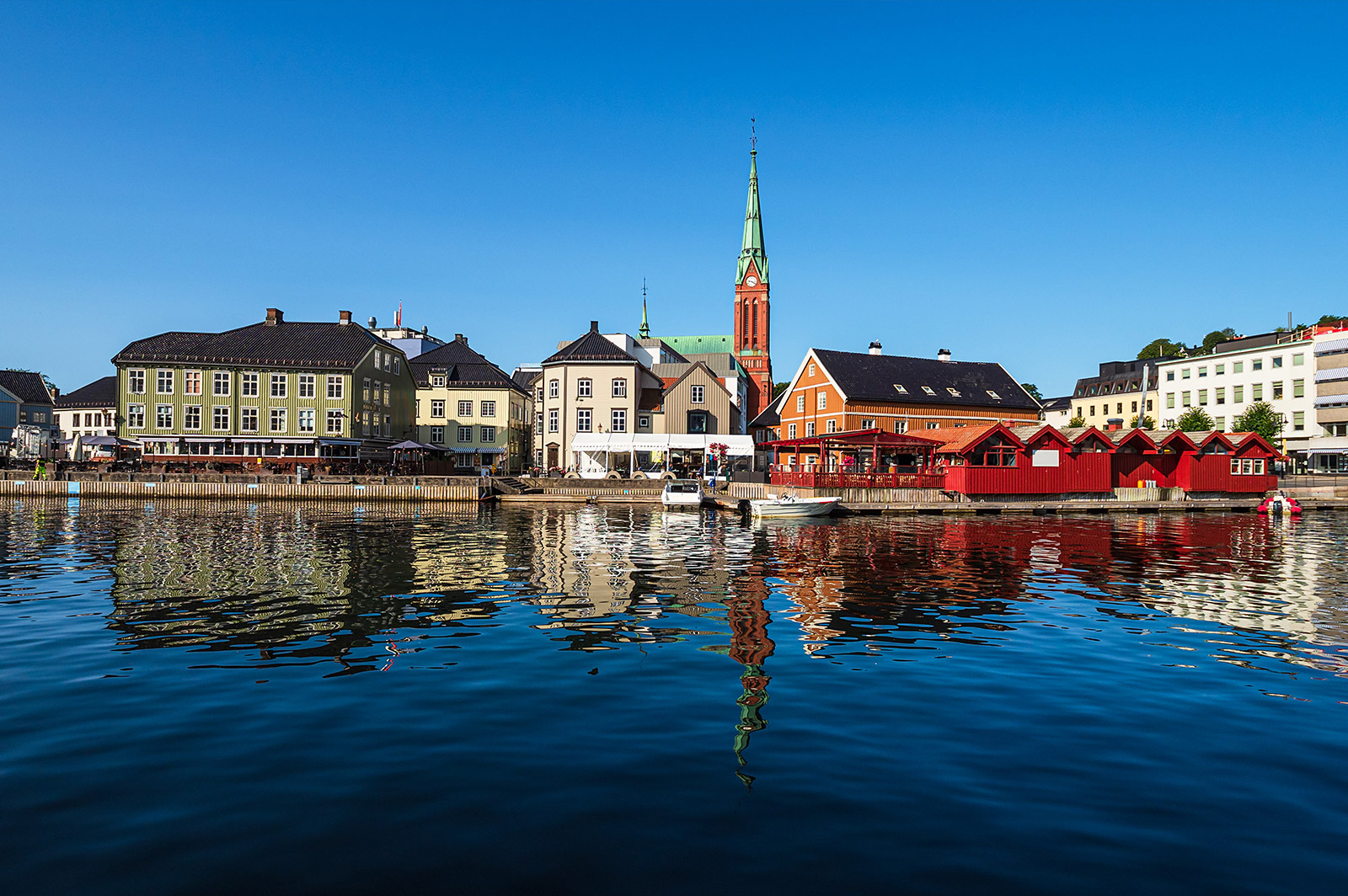
Norway’s charming coastal city of Arendale is defined by its maritime history, beautiful archipelago, and bustling city center. Couched in islands and connected by bridges and ferries, Arendal was once home to Norway’s largest fleet. Stroll its cobblestoned Old Town, known as Tyholmen to locals, for its well-preserved buildings, Old Town Hall, and Kløckers Hus, which houses the city’s museum. Visit the thirteenth-century stone church, the Ironworks Museum, and local art galleries. Take in watersports like sailing and canoeing and explore the archipelago by taking a ferry to one of its islands or simply enjoy nature through Arendal’s forests, mountains, rivers, and lakes.
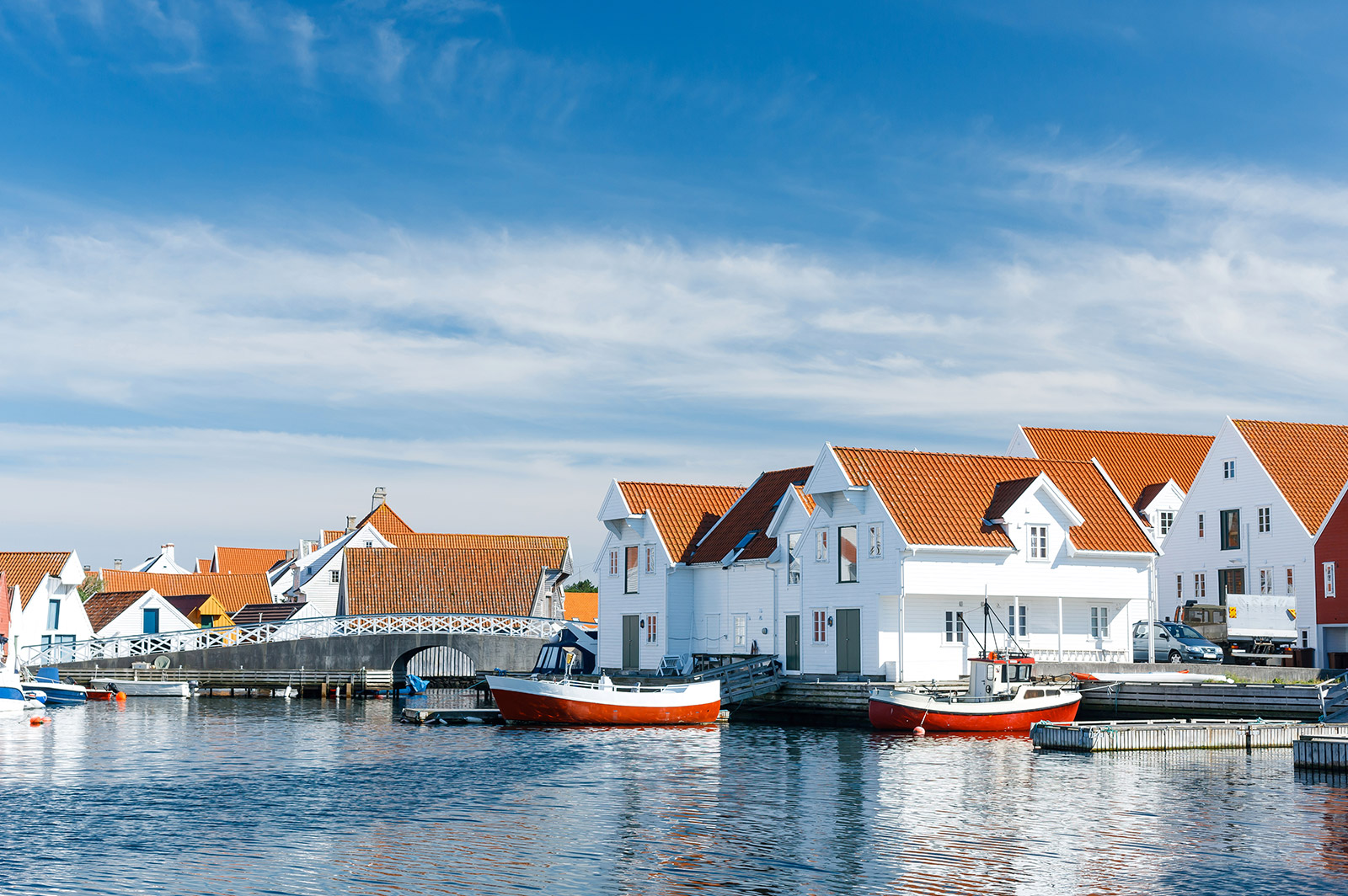
On the southern tip of Karmøy island in the Boknafjorden and Karmsundet strait, sits pretty Skudeneshavn. A charming town founded in the early nineteenth century, Skudenshavn is defined by its roots as a small fishing village and its Old Town, Gamle Skudeneshavn. Considered one of the best preserved in Northern Europe, the Old Town is frequently called “the White Empire Town,” because the town’s cityscape is characterized by its pristine white wooden houses crafted in the Empire style. Discover the town’s narrow streets, beautiful architecture, and charming cafés, perhaps visiting the Skudeneshavn and Mælandsgården museums and Verdens Minste Kafe, the world’s smallest café. Nature lovers can explore Skudenshavn’s hiking spots, take in coastal walks, and beautiful beaches that dot the archipelago.
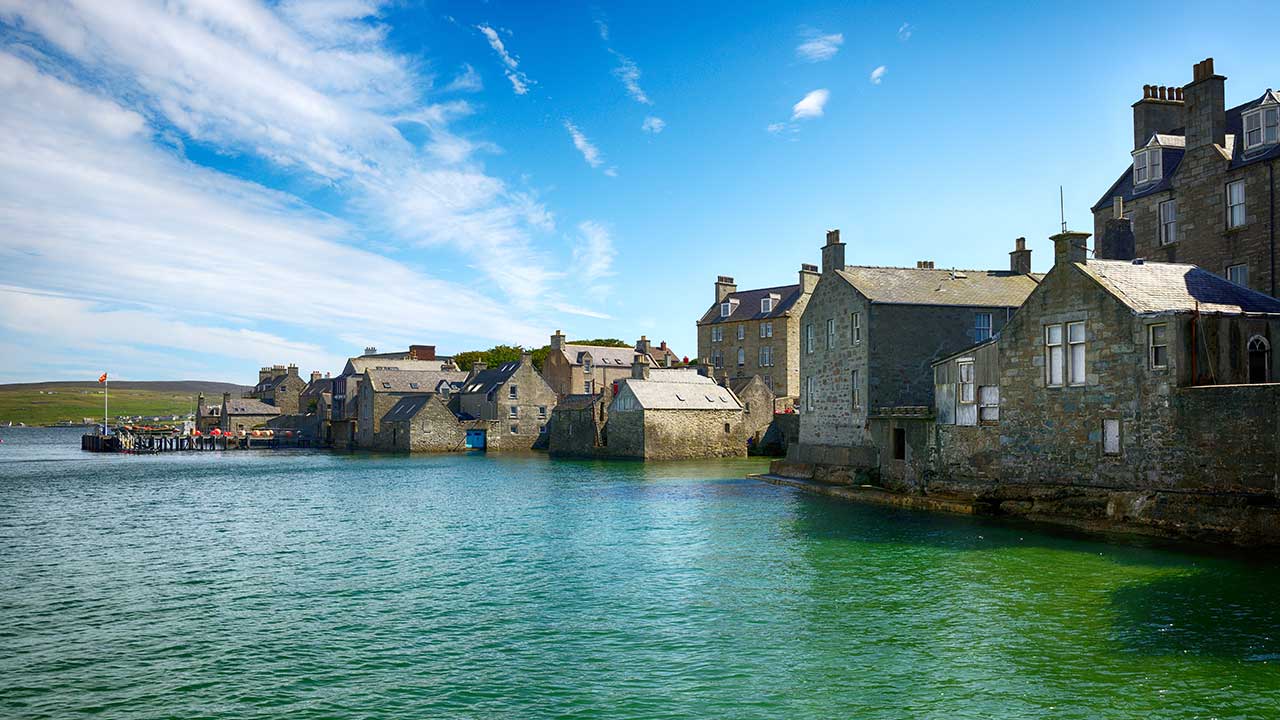
The Shetland Islands is a North Sea archipelago, of which only sixteen islands are inhabited, many only accessible via small sailing vessels. The archipelago is perfect for yachting, with a raw, rugged coastline and low rolling hills, providing opportunities for spying wildlife. Shaped by billions of years of shifting sand and sea, Shetland’s natural landscape is among the most dramatic in the world, teeming with wildlife from puffins to native Shetland ponies. Lerwick is Shetland’s only town, founded as an unofficial marketplace to service seventeenth-century Dutch herring fleets, and the island’s capital since 1708.
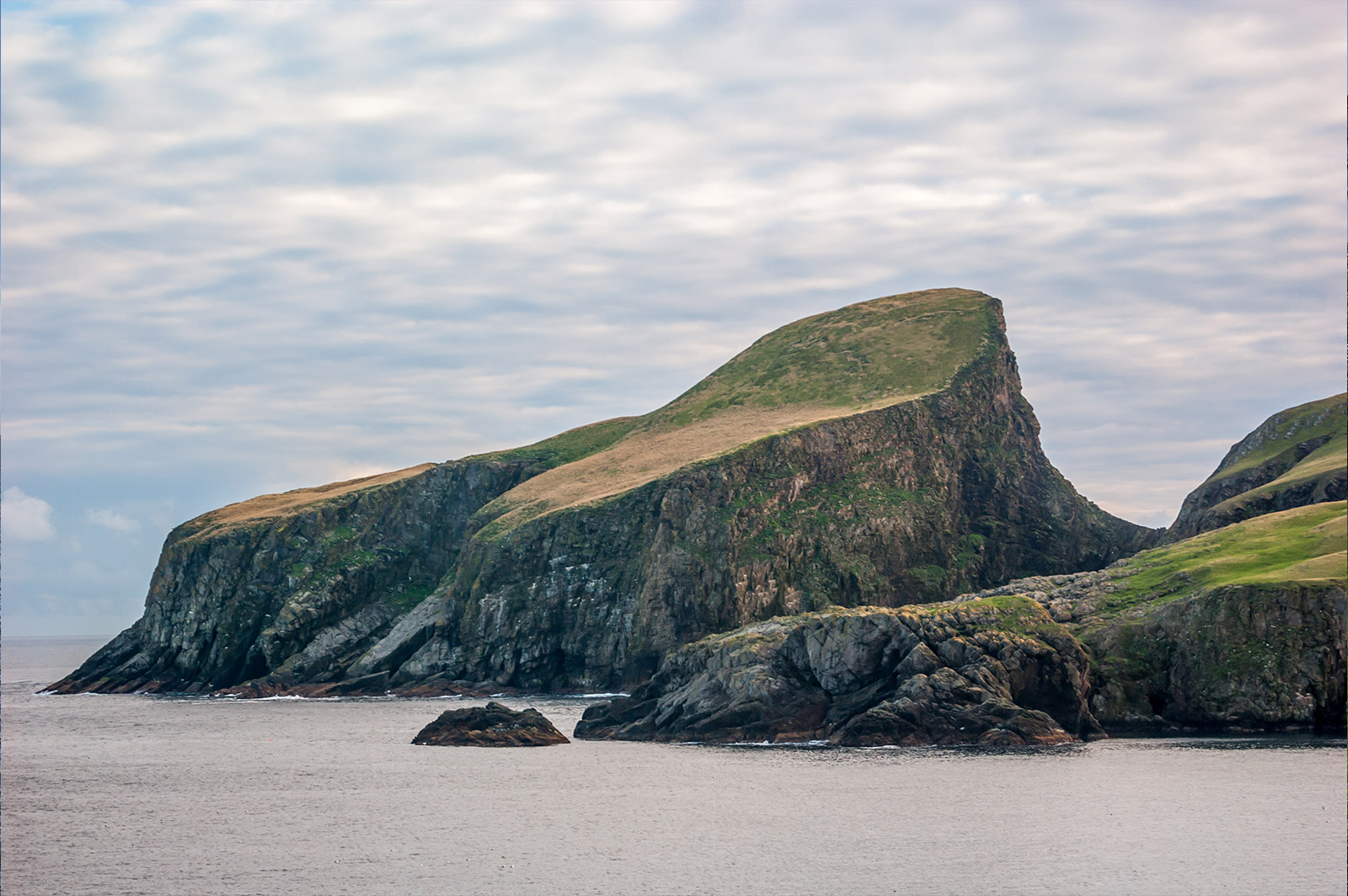
The Shetland Islands is a North Sea archipelago, of which only sixteen islands are inhabited, many only accessible via small sailing vessels. The archipelago is perfect for yachting, with a raw, rugged coastline and low rolling hills, providing opportunities for spying wildlife. Shaped by billions of years of shifting sand and sea, Shetland’s natural landscape is among the most dramatic in the world, teeming with wildlife. SeaDream calls on Fair Isle, a small remote island tucked away here, known for both its natural heritage and famous knitwear. Walk or bike its lovely surroundings, perhaps paying a visit to the internationally renowned Fair Isle Bird Observatory or the namesake Lighthouse, the tallest in Shetland.
With seemingly unending miles of coastline and beautiful natural backdrops to explore, the Orkney Islands archipelago lies on the rugged northern tip of Scotland. Ideal for yachting, walking, hiking, and cycling, many of the islands along these shorelines are uninhabited. The capital of the Orkney Islands, Kirkwall, is full of character and Norse heritage. A Royal Burgh since 1486, Kirkwall’s name comes from the Norse word “Kirkjuvagr,” meaning “Church on the bay,” as exemplified by its St. Magnus Cathedral.
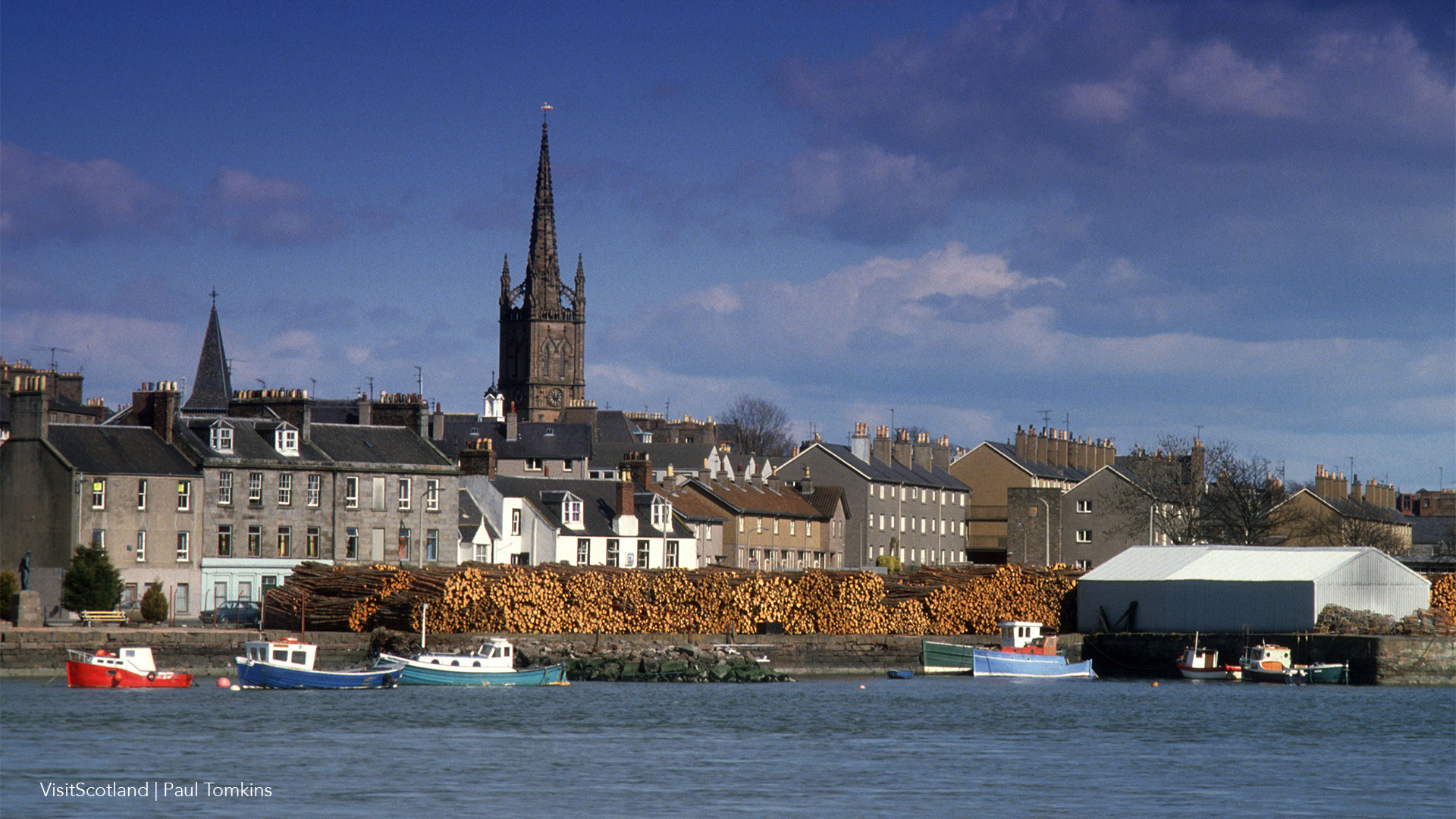
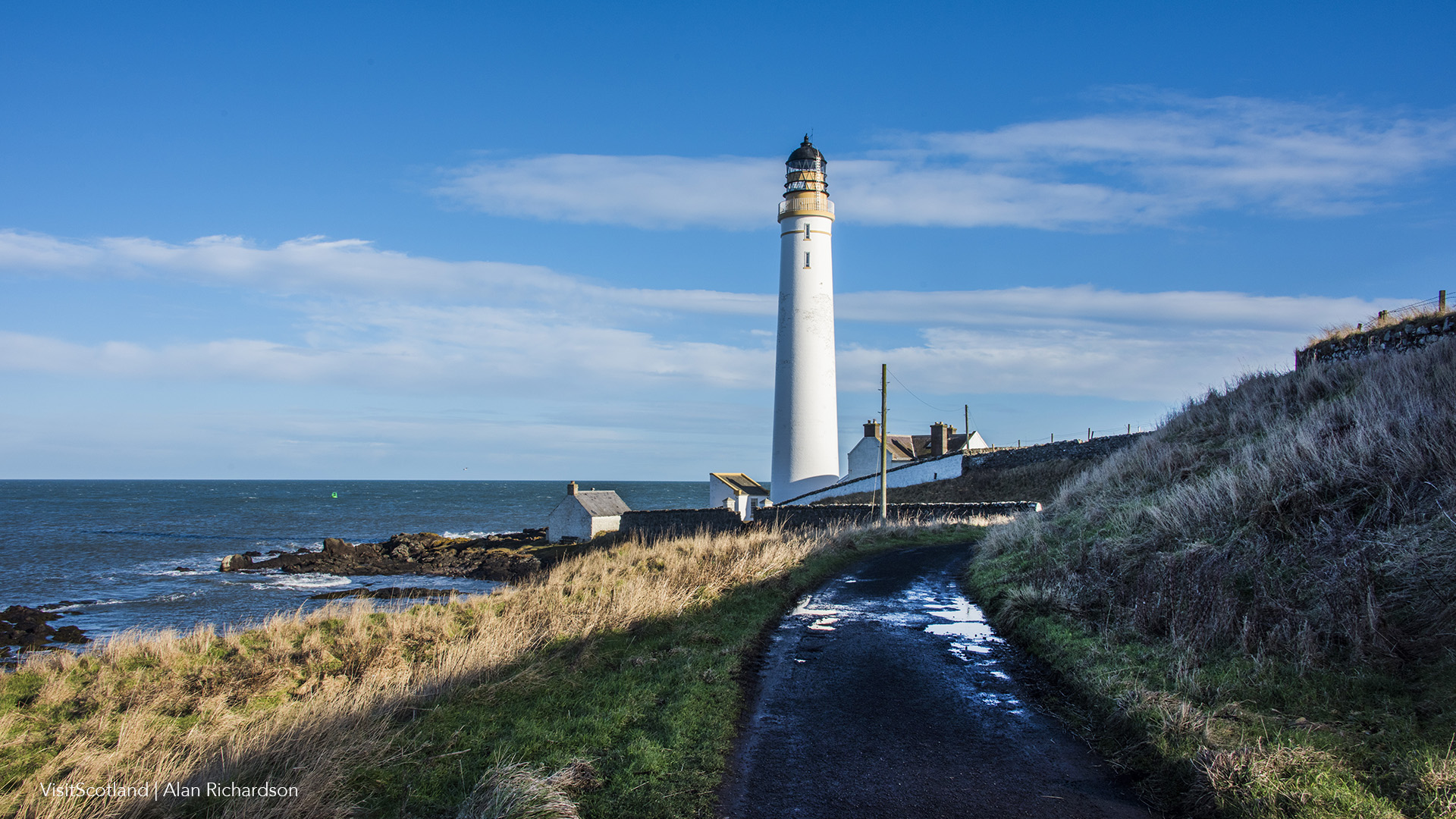
On the east coast of Scotland, between the mouths of the North and South Esk Rivers, sits Montrose. Established as a royal borough created by King David I in the twelfth century, Montrose was an important medieval harbor port and contributed to Britain’s defense during World War II. The town is home to the Montrose Basin, a two-square-mile lagoon and nature reserve for wading birds and wildfowl. Visit the Scurdie Ness Lighthouse, guiding ships for almost 150 years, and the House of Dun, a Georgian mansion built in the 1730s by architect William Adam. Golf enthusiasts will not want to miss a truly authentic golf experience at Montrose Golf Links, home to the fifth oldest course in the world.
A vibrant city on the east coast of Scotland, Dundee boasts more hours of sunshine than any other Scottish city, shining on an abundance of green spaces. Nicknamed the “City of Discovery,” in 2014 Dundee was recognized by the United Nations as the United Kingdom’s first-ever UNESCO-awarded City of Design. Whether you are a history buff, a cultural enthusiast, or nature lover—or all three—Dundee offers a unique glimpse into Scotland. Wander the 400-acre Camperdown Country Park, dotted with neoclassical architecture and over 190 tree species. Engage in outdoor activities, including hiking and golfing, with easy access to St. Andrew’s Golf Course, where golf has been played for six hundred years. Dundee’s redesigned waterfront features the nautical museum Discovery Point, featuring the Royal Research Ship (RRS) Discovery, Captain Scott’s Antarctic expedition ship, and the nineteenth-century warship HM Frigate Unicorn. Galleries and art museums include the McManus Gallery, Verdant Works, and V&A Dundee, dedicated to Scottish design achievements and marked by an exterior that mimics of the cliffs of East Scotland. A walk around Dundee reveals quaint pubs and taverns, offering a selection of beer, whiskies, Scotch pies, and bangers and mash.
A vibrant city on the east coast of Scotland, Dundee boasts more hours of sunshine than any other Scottish city, shining on an abundance of green spaces. Nicknamed the “City of Discovery,” in 2014 Dundee was recognized by the United Nations as the United Kingdom’s first-ever UNESCO-awarded City of Design. Whether you are a history buff, a cultural enthusiast, or nature lover—or all three—Dundee offers a unique glimpse into Scotland. Wander the 400-acre Camperdown Country Park, dotted with neoclassical architecture and over 190 tree species. Engage in outdoor activities, including hiking and golfing, with easy access to St. Andrew’s Golf Course, where golf has been played for six hundred years. Dundee’s redesigned waterfront features the nautical museum Discovery Point, featuring the Royal Research Ship (RRS) Discovery, Captain Scott’s Antarctic expedition ship, and the nineteenth-century warship HM Frigate Unicorn. Galleries and art museums include the McManus Gallery, Verdant Works, and V&A Dundee, dedicated to Scottish design achievements and marked by an exterior that mimics of the cliffs of East Scotland. A walk around Dundee reveals quaint pubs and taverns, offering a selection of beer, whiskies, Scotch pies, and bangers and mash.
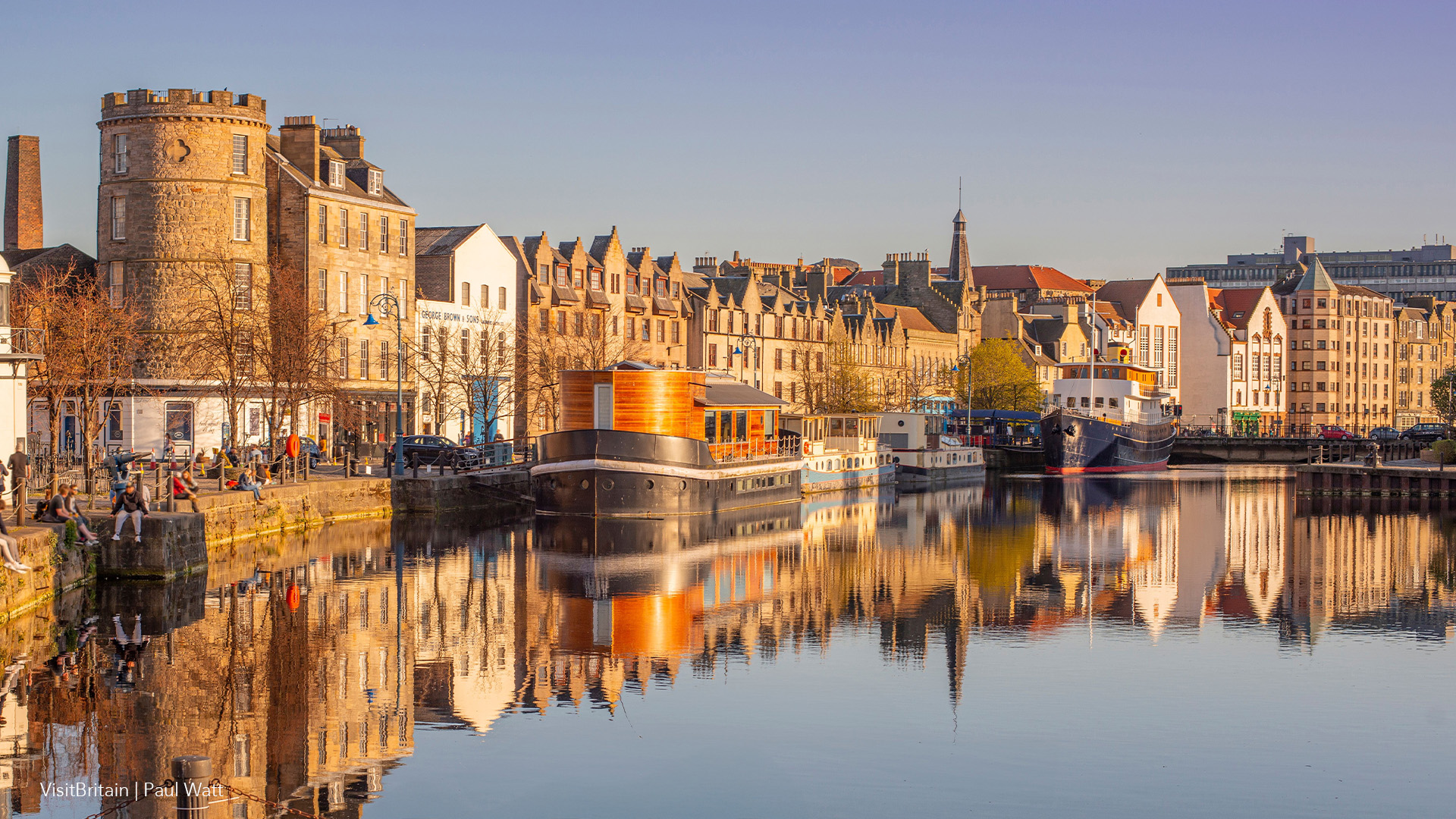
Scotland’s hilly capital of Edinburgh is renowned for its history, cultural richness, and architectural majesty. Walk in the footsteps of kings and queens at Edinburgh Castle, perched atop Castle Rock, home to Scotland’s crown jewels and the Stone of Destiny. The Old Town’s distinctive medieval layout, with its narrow streets and hidden courtyards, sets it apart from the planned elegance of Georgian New Town, together a UNESCO World Heritage site. Explore the Old Town’s historic Royal Mile and climb Arthur’s Seat, a hilltop in the 640-acre royal park that offers panoramic views of the city. Visit the National Museum of Scotland and Holyrood Palace, the official residence of the British monarch in Scotland.
Scotland’s hilly capital of Edinburgh is renowned for its history, cultural richness, and architectural majesty. Walk in the footsteps of kings and queens at Edinburgh Castle, perched atop Castle Rock, home to Scotland’s crown jewels and the Stone of Destiny. The Old Town’s distinctive medieval layout, with its narrow streets and hidden courtyards, sets it apart from the planned elegance of Georgian New Town, together a UNESCO World Heritage site. Explore the Old Town’s historic Royal Mile and climb Arthur’s Seat, a hilltop in the 640-acre royal park that offers panoramic views of the city. Visit the National Museum of Scotland and Holyrood Palace, the official residence of the British monarch in Scotland.
Scotland’s hilly capital of Edinburgh is renowned for its history, cultural richness, and architectural majesty. Walk in the footsteps of kings and queens at Edinburgh Castle, perched atop Castle Rock, home to Scotland’s crown jewels and the Stone of Destiny. The Old Town’s distinctive medieval layout, with its narrow streets and hidden courtyards, sets it apart from the planned elegance of Georgian New Town, together a UNESCO World Heritage site. Explore the Old Town’s historic Royal Mile and climb Arthur’s Seat, a hilltop in the 640-acre royal park that offers panoramic views of the city. Visit the National Museum of Scotland and Holyrood Palace, the official residence of the British monarch in Scotland.
A vibrant city on the east coast of Scotland, Dundee boasts more hours of sunshine than any other Scottish city, shining on an abundance of green spaces. Nicknamed the “City of Discovery,” in 2014 Dundee was recognized by the United Nations as the United Kingdom’s first-ever UNESCO-awarded City of Design. Whether you are a history buff, a cultural enthusiast, or nature lover—or all three—Dundee offers a unique glimpse into Scotland. Wander the 400-acre Camperdown Country Park, dotted with neoclassical architecture and over 190 tree species. Engage in outdoor activities, including hiking and golfing, with easy access to St. Andrew’s Golf Course, where golf has been played for six hundred years. Dundee’s redesigned waterfront features the nautical museum Discovery Point, featuring the Royal Research Ship (RRS) Discovery, Captain Scott’s Antarctic expedition ship, and the nineteenth-century warship HM Frigate Unicorn. Galleries and art museums include the McManus Gallery, Verdant Works, and V&A Dundee, dedicated to Scottish design achievements and marked by an exterior that mimics of the cliffs of East Scotland. A walk around Dundee reveals quaint pubs and taverns, offering a selection of beer, whiskies, Scotch pies, and bangers and mash.
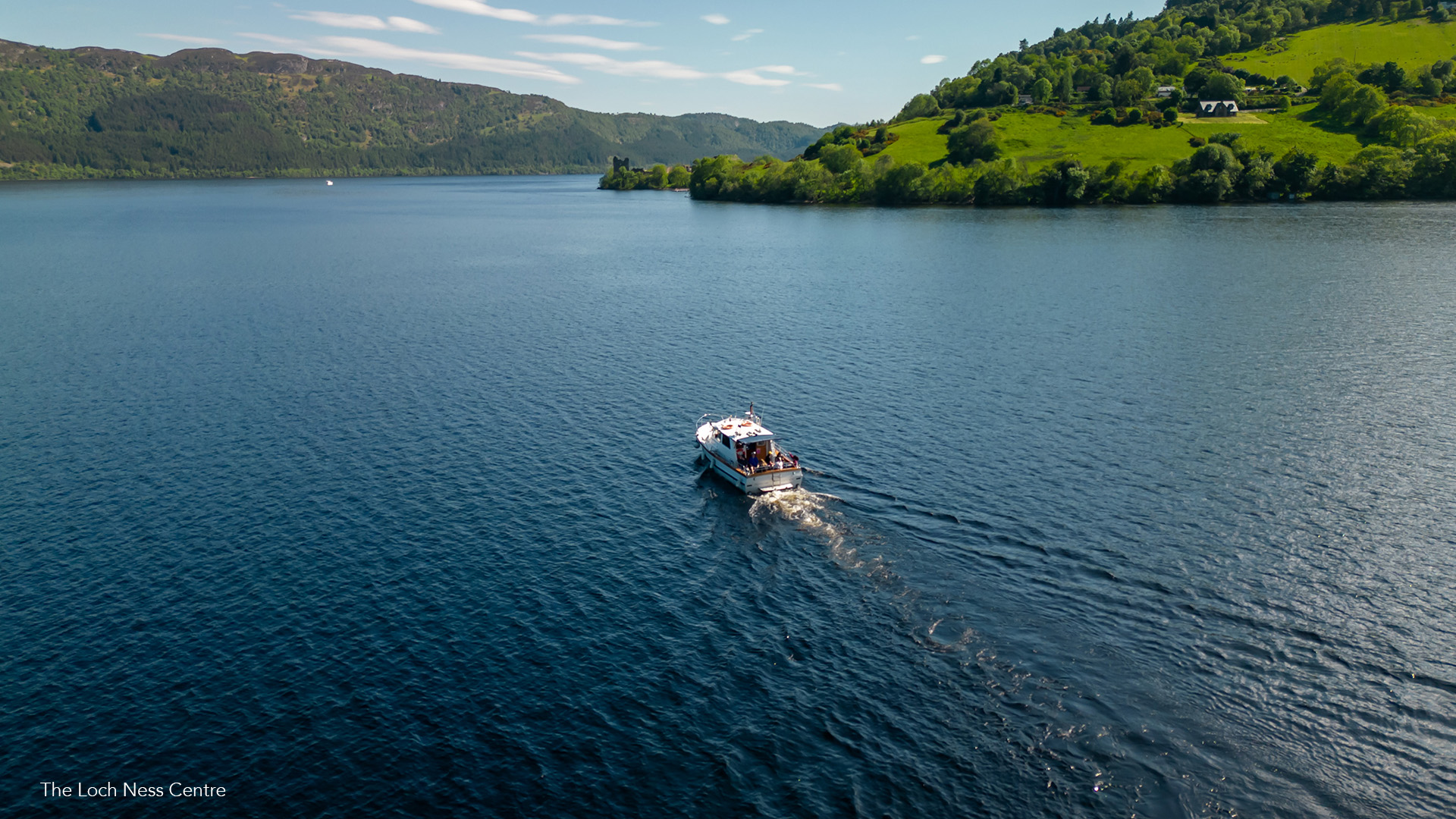
Sitting pretty on an inlet in the North Sea, with stunning views of the western Beins and Black Isle, Invergordon was established by the Gordons of Invergordon Castle in the early 1800s. It became a Royal Navy base in 1913 and played a prominent role in World War I and World War II to which the Invergordon Naval Museum & Heritage Center pays tribute. Outside of its lovely harbor and maritime history, Invergordon is the gateway to the Scottish Highlands, a region defined by Loch Ness Lake the legend of the mythical Loch Ness creature. Scenic walking trails abound, including the Invergordon Mural Trail, decorated by murals painted by local artists, and the Saltburn Woodland Walk. Visit the impressive Dunrobin Castle, one of Britain’s oldest continuously inhabited houses and the largest in the Northern Highlands, and along the way explore local distilleries and sample different whiskies.
Sitting pretty on an inlet in the North Sea, with stunning views of the western Beins and Black Isle, Invergordon was established by the Gordons of Invergordon Castle in the early 1800s. It became a Royal Navy base in 1913 and played a prominent role in World War I and World War II to which the Invergordon Naval Museum & Heritage Center pays tribute. Outside of its lovely harbor and maritime history, Invergordon is the gateway to the Scottish Highlands, a region defined by Loch Ness Lake the legend of the mythical Loch Ness creature. Scenic walking trails abound, including the Invergordon Mural Trail, decorated by murals painted by local artists, and the Saltburn Woodland Walk. Visit the impressive Dunrobin Castle, one of Britain’s oldest continuously inhabited houses and the largest in the Northern Highlands, and along the way explore local distilleries and sample different whiskies.
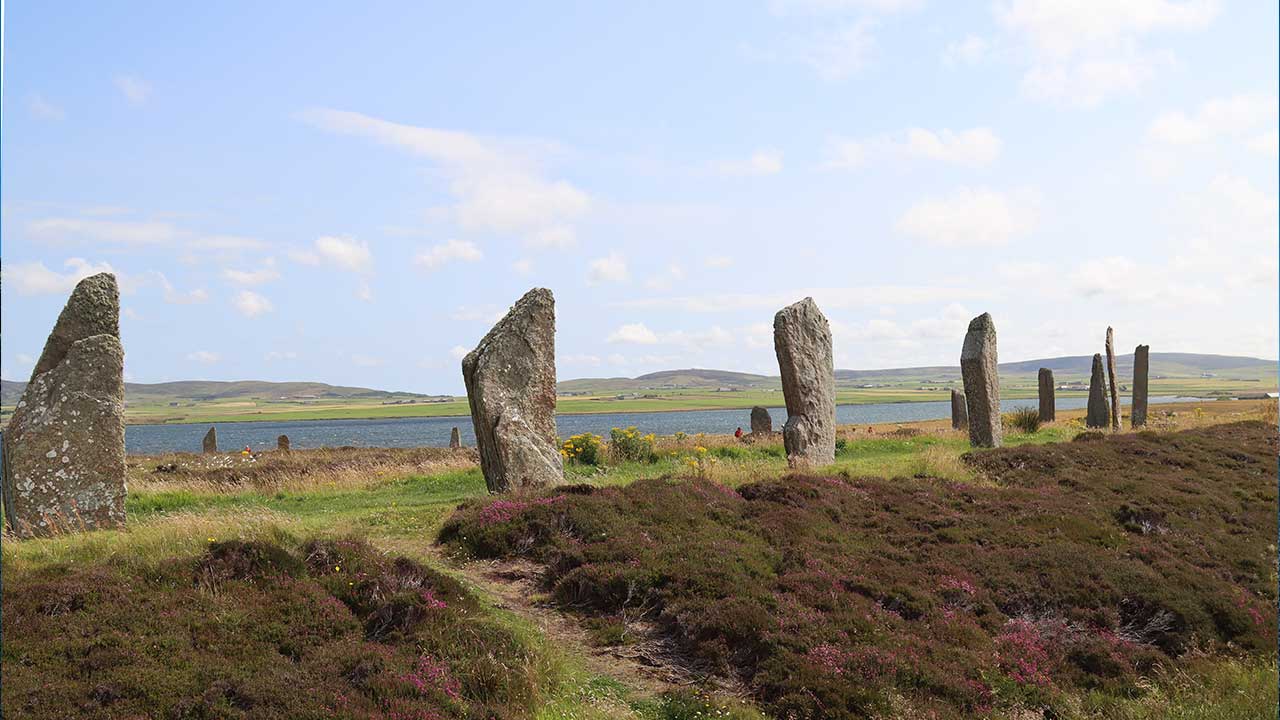
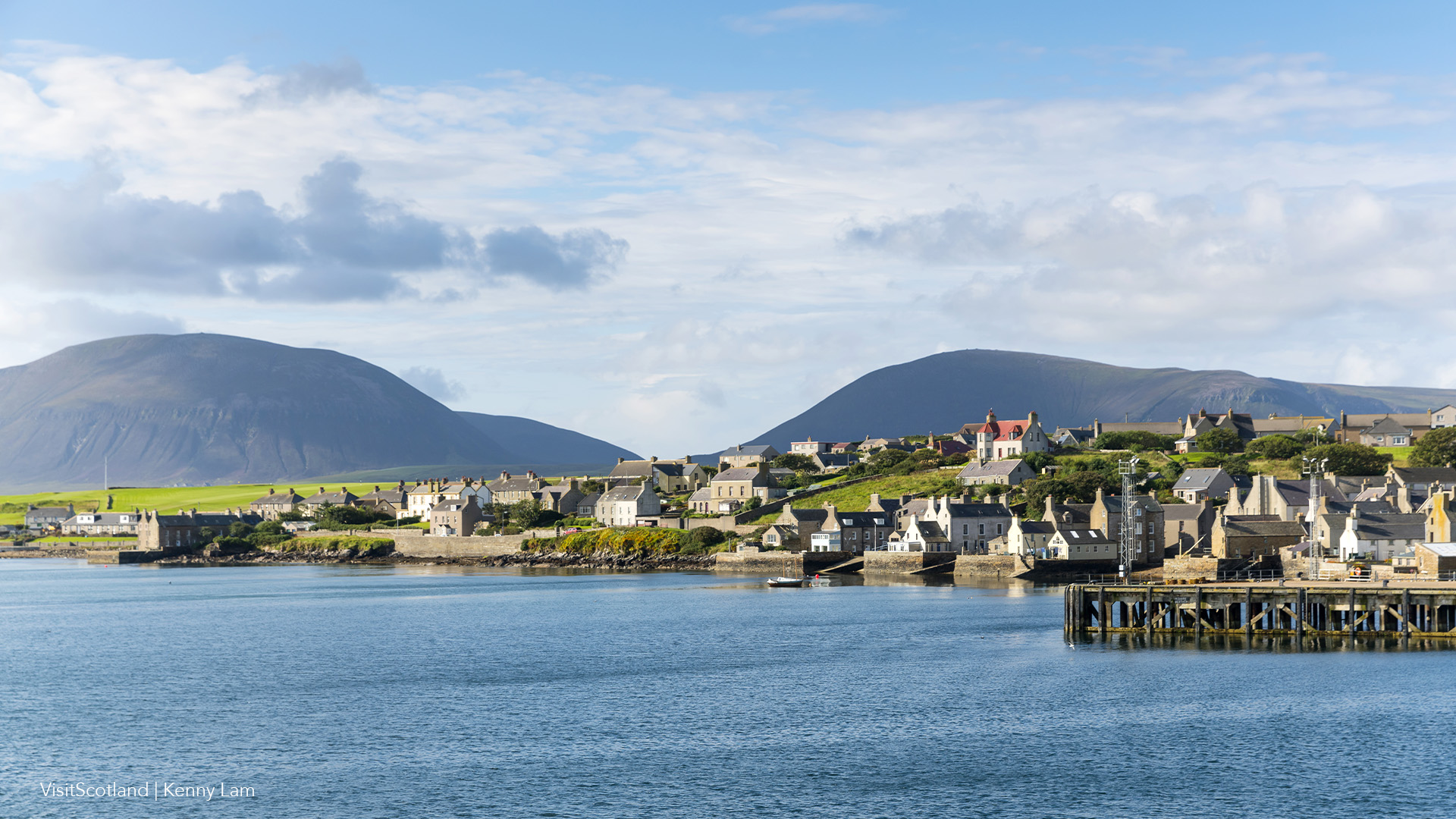
With seemingly unending miles of coastline and beautiful natural backdrops to explore, the Orkney Islands archipelago lies on the rugged northern tip of Scotland. Ideal for yachting, walking, hiking, and cycling, many of the islands along these shorelines are uninhabited. Stromness enjoys a rich maritime history, notably as a safe haven for ships during the Viking era and a popular fishing port for whaling and herring. Visit St. Magnus Cathedral, founded in 1137 by the Viking Earl Rogvald, and the Highland Park Distillery, one of the oldest working whisky distilleries in Scotland. Stromness is your gateway to Skara Brae, a remarkable site of stone houses built into earthen mounds up to 5,000 years old, and the Ring of Brodgar, a UNESCO World Heritage site of 27 standing stones that form a circle in the Orkney mainland’s rolling hills and lochs.
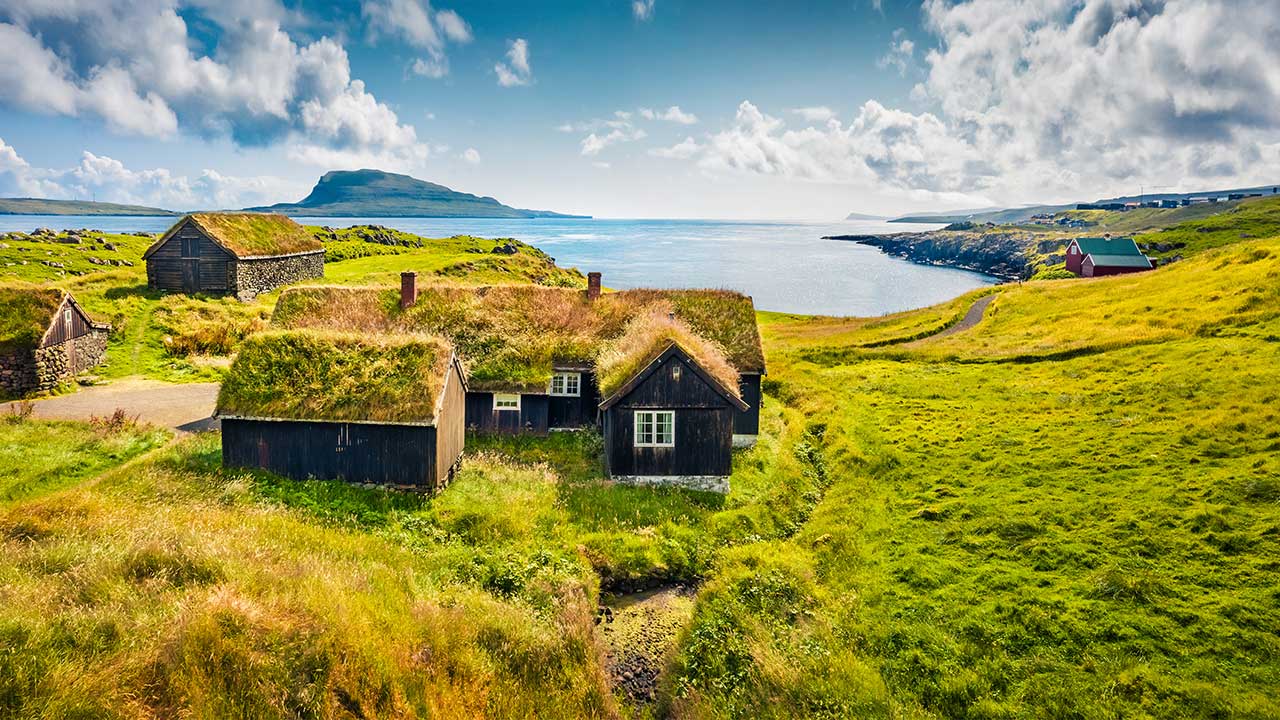
This remote archipelago of eighteen islands is truly removed from time, defined by a dramatic landscape with steep cliffs, waterfalls, and green hills, making it the perfect destination for kayaking, hiking, and biking. As a result of its isolation, the Faroese language is considered by many to be the closest to the original Viking language. SeaDream calls on Torshavn (in Faroese, “Thor’s Harbor”), named after the Nordic god of thunder, Thor. Its quaint Old Town is lined with wooden turf-roofed houses and boasts the iconic Tórshavn Cathedral, restaurants, and upscale boutiques. Northern Europe’s best-kept secret is your gateway to the Faroe Islands.
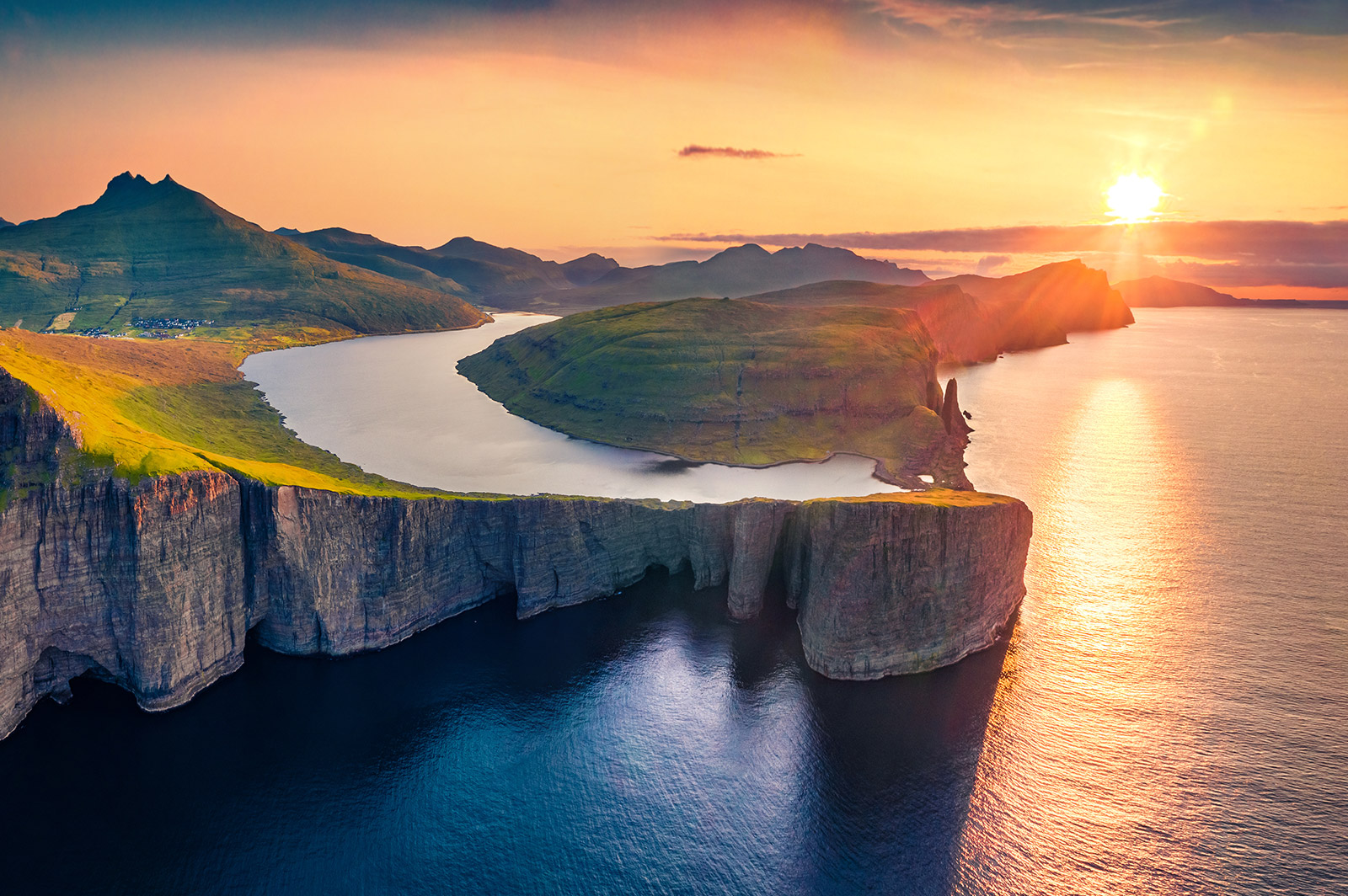
The remote archipelago of 18 islands known as the Faroe Islands is truly removed from time. As a result of its isolation, the Faroese language is considered by many to be the closest to the original Viking language. SeaDream calls on Vágur, a fourteenth-century red-roofed town on the island of Suðuroy, on the Vágsfjørður fjord, defined by its Múlafossur Waterfall that drops over 100 feet into the North Atlantic Ocean. In Vágur, visit churches and cathedrals, peruse art galleries and museums, and connect with nature as you kayak or canoe.
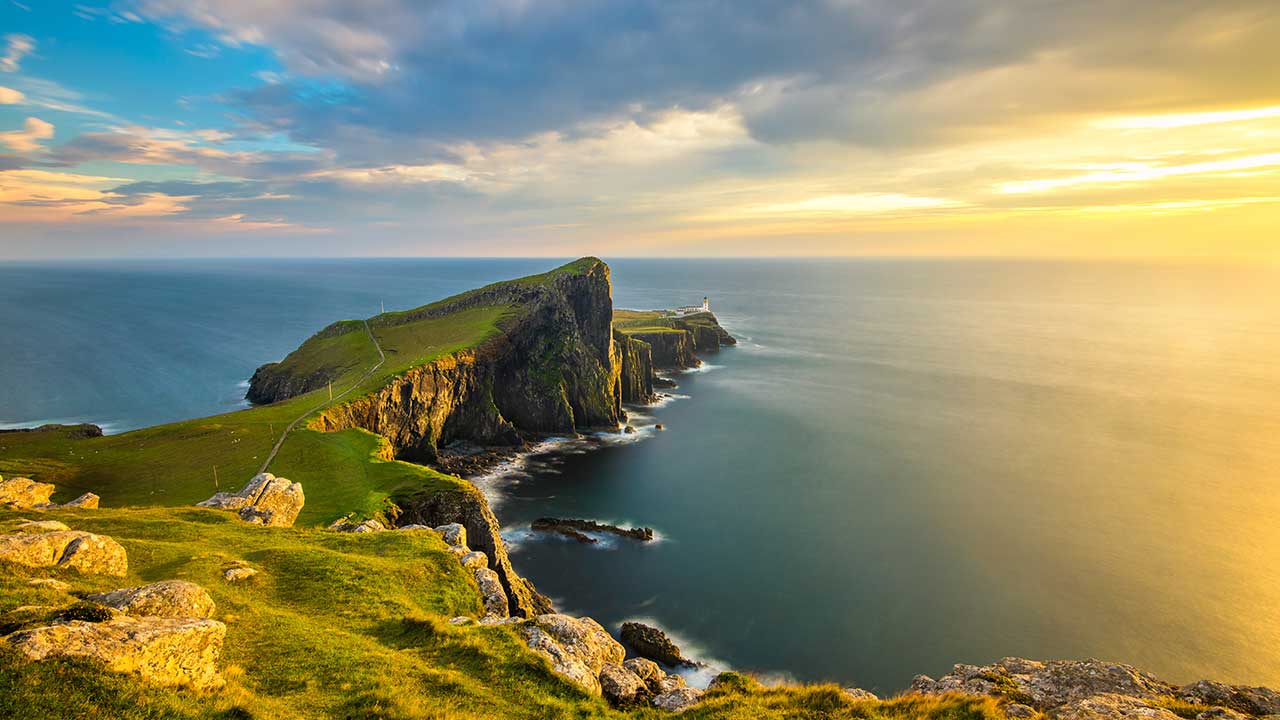
The northernmost island in the Inner Hebrides of Scotland, the Isle of Skye is defined by its rugged landscapes, medieval castles, picturesque fishing villages, and otherworldly natural landscapes—grassy moors, steep glens, tumbling waterfalls, rivers, sparkling mountainsides and pristine harbors, inviting exploration.
Stornoway, Isle of Lewis, Scotland, United Kingdom
Morning
Evening
Known for its rugged coastline, stunning white beaches, wild mountainous terrain, and rich history, Isle of Lewis is the perfect yachting destination for travelers looking to explore Scotland’s natural beauty and Gaelic cultural heritage. The largest of the inhabited islands in the Outer Hebrides, Isles of Lewis is defined by its sandy beaches backed by dunes and machair on the west coast, giving way to an expansive peat-covered plateau in the center of the island. The eastern coastline is markedly more rugged and is mostly rocky cliffs, interrupted by small coves and beaches. Explore the ancient Callanish Standing Stones, one of the most significant archaeological monuments in the Outer Hebrides.
Castlebay, Isle of Barra, Scotland, United Kingdom
Morning
Evening
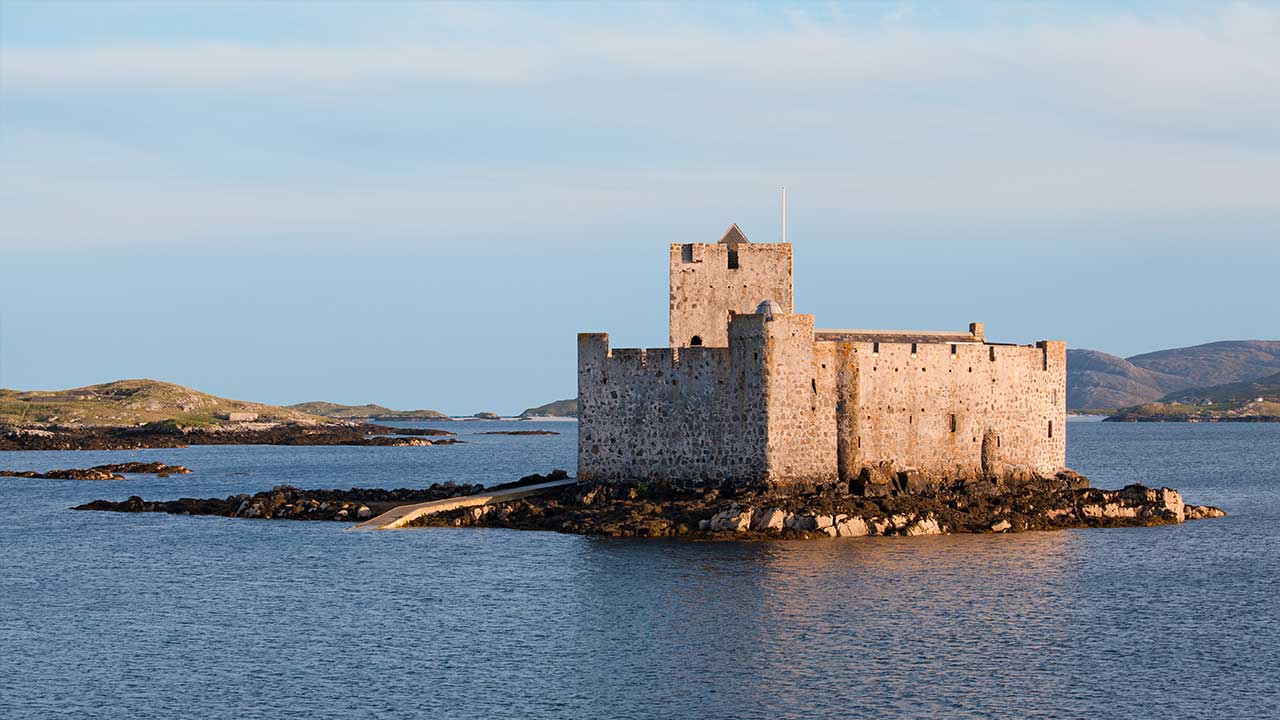
Barra is the most southerly of the inhabited islands in the Outer Hebrides, heralded for its serene beaches, stunning green hillsides, machair and moor. Like its neighboring islands of Uist, Lewis, and Skye, the Isle of Barra is pre-Norse and presents a remote, otherworldly quality. From its white-sand beaches on the north side to the rocky inlets on the southeast side, the Isle of Barra exudes a raw, untamed beauty. At just eight miles long and five miles wide, Barra is easy to explore, its Barra Head Lighthouse welcoming visitors since it began operating in 1833. Kisimul Castle, an impressive 11th- century fortress, sits on a small rocky island in Castlebay Harbor. Barra is a coveted destination for outdoor enthusiasts, offering snorkeling, kayaking, paddleboarding, and beach-going opportunities. The highest point on the island, Heaval, provides a particularly distinct vantage point, boasting views of the coastline, perfect for hikers and birdwatchers.
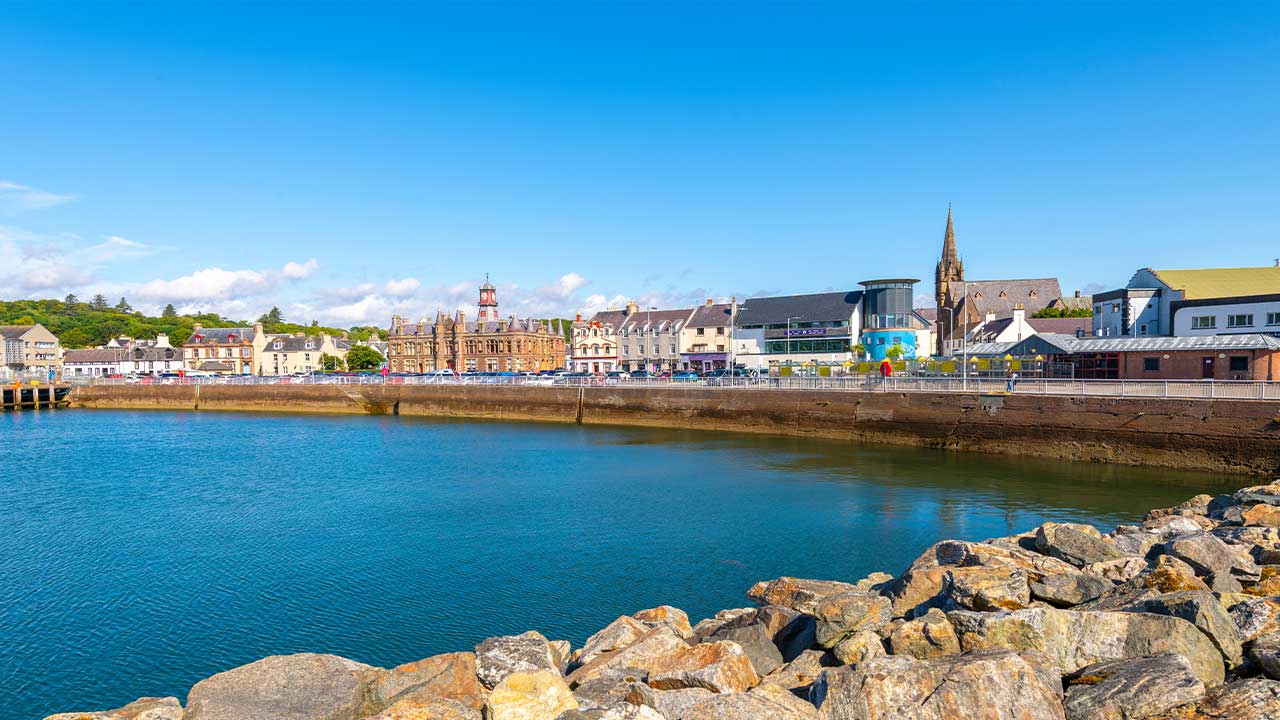
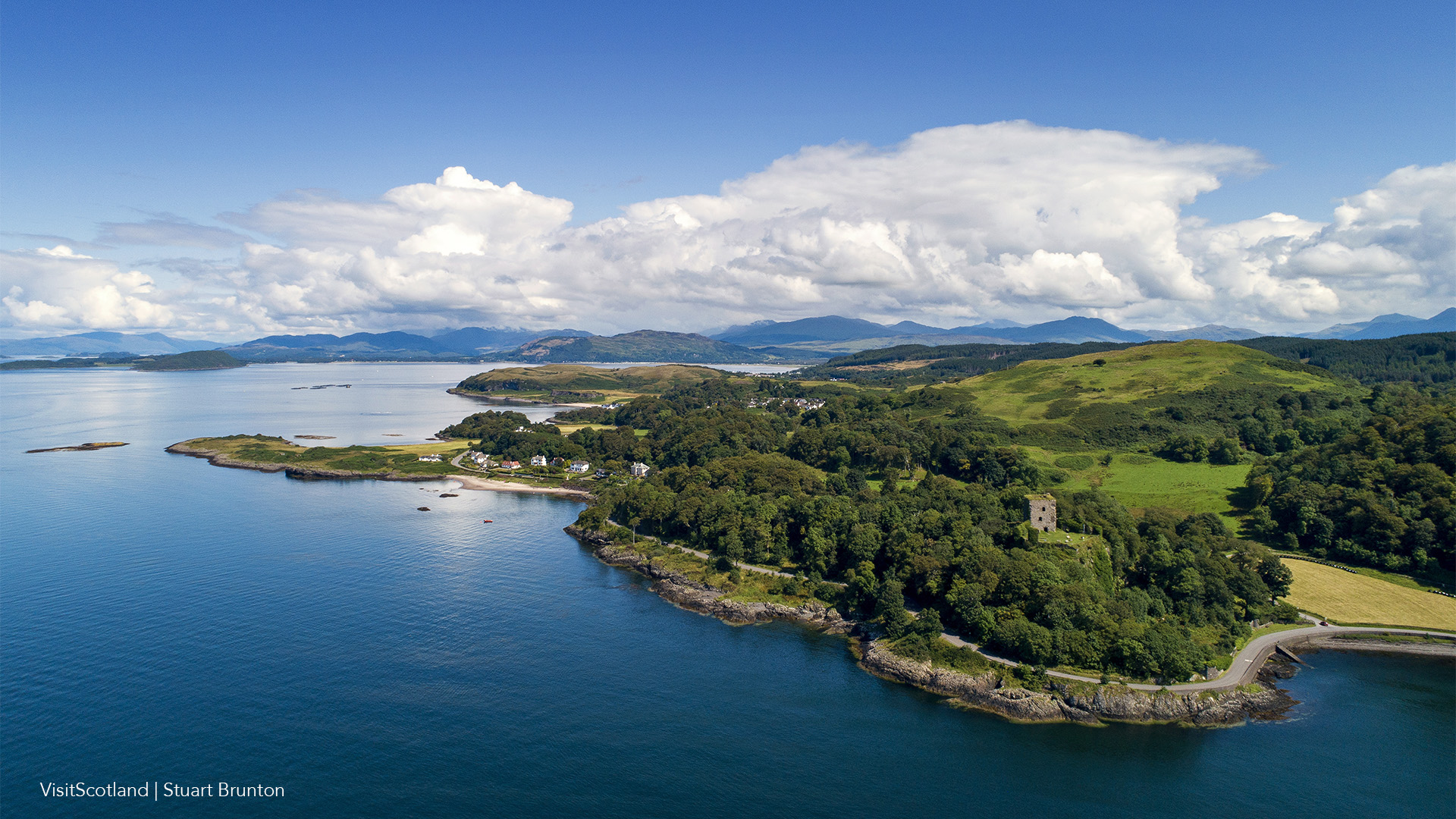
A resort town sitting on the west coast of Scotland in the Firth of Lorn, Oban (in Gaelic, meaning “Little Bay”), charms with its natural beauty. The horseshoe-shaped bay is protected by the island of Kerrera and, beyond that, the Isle of Mull, making it perfect for watersports such as kayaking, canoeing, and fishing. The town grew up around the distillery, founded in 1794, which whisky enthusiasts still visit today. Despite its small size, Oban is known as the “Seafood Capital” of Scotland, serving up fresh seafood in its pubs and restaurants. McGaig’s Tower, a circular tower built from Bonawe granite in 1897, stands on Battery Hill and overlooks the islands of Kerrera, Lismore, and Mull. Just outside the town, visitors find thirteenth-century Dunollie Castle, standing on a rocky ridge overlooking Oban Bay. North of Oban, the natural rock formation of Fingal’s Dogstone is closely tied to Celtic mythology as the location where the giant Fingal would leave his Dog Bran while hunting across the Hebridean Islands.
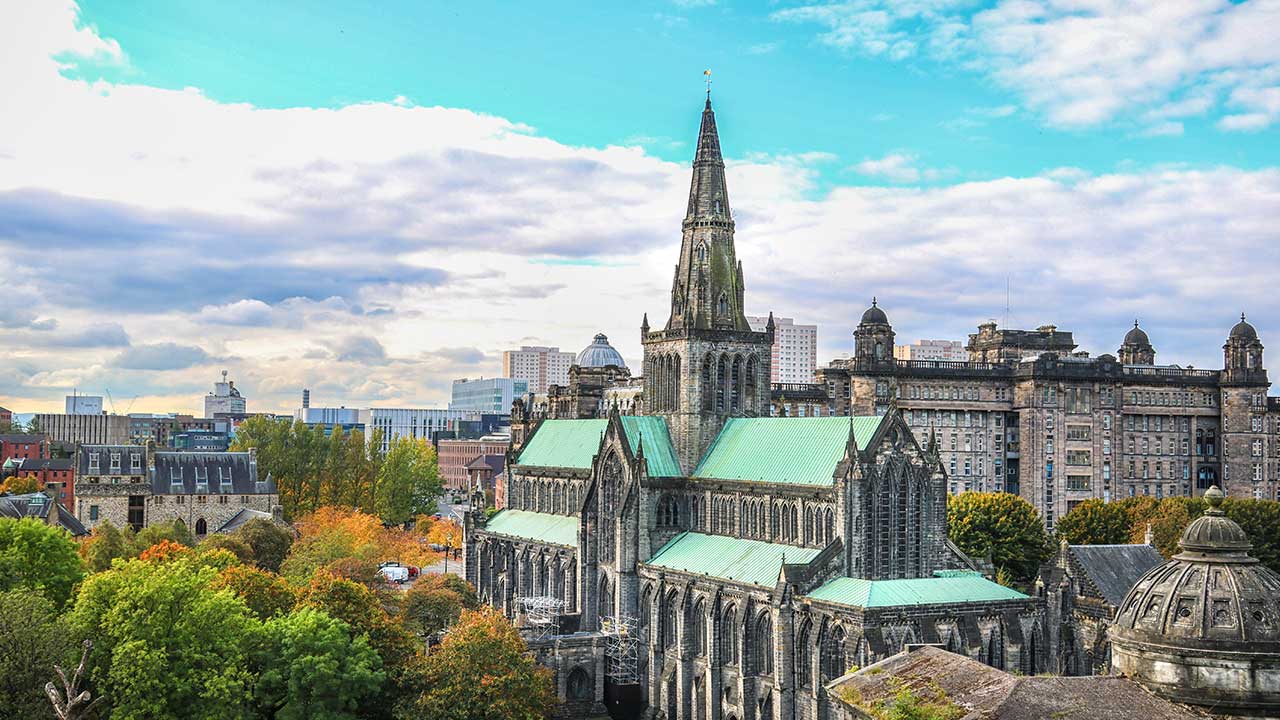
Sitting along the banks of the Clyde River, Glasgow is one of Northern Europe’s most endearing and culturally vibrant cities, boasting a variety of art and museums, galleries, luxe restaurants, and pubs. The city’s Gaelic name, Glaschu, fittingly translates as “dear green place.” Glasgow boasts an incredible architectural heritage, ranging from medieval times to the Victorian and Art Nouveau eras, set within a city full of abundant parks and green spaces, making it ripe for exploration. Glasgow is also home to Scotland’s national opera, ballet, and theater companies and is a UNESCO City of Music, presenting a lively music scene. Defined by a strong sense of community and welcoming ambiance, the dynamic city shines for diversity, from the city’s artsy West End to historic East End, home to the 12th-century Gothic Glasgow Cathedral.
*Single Supplement for this voyage is 200% for Yacht Club Deck 2, 3 and 4. For Commodore, Admiral and Owners Suite, a 200% single supplement rate applies.
Government, Port, Document Issuance, Handling & Service fees: $1820 per guest (included)
Please Note: Fares are capacity controlled and may change without notice. The fares are per person based on double occupancy. Single and third person rates are also available. SeaDream Yacht Club strongly recommends that all guests purchase travel insurance.
Yachting Land Adventures & Activities
Please check back soon for updates.
Testimonials
We really had a great time which far exceeded our expectations.
Mr & Mrs AmbroseTexas
Another great trip with SeaDream. We so enjoyed the service & attention to detail. Fabulous food!! Wish we could take you home with us.
Mr & Mrs RollandFlorida