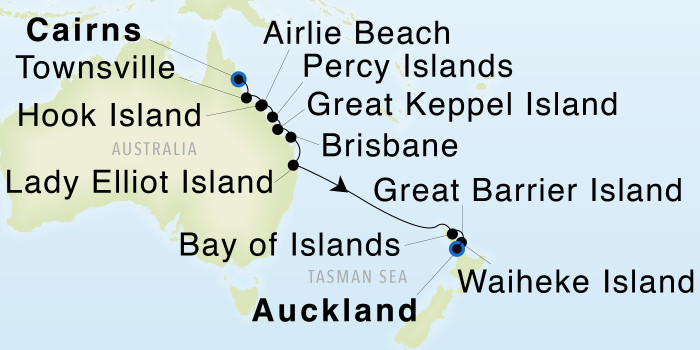
Depart Cairns for the outer reef pontoons of the Agincourt Ribbons, then trade coral for rainforest in the ancient canopy of Daintree. Continue south to Townsville, where wild koalas doze in the gum trees above Magnetic Island's granite headlands and coral gardens fringe Florence Bay, before threading the Whitsundays: mirror water and Ngaro rock art at Nara Inlet, then Airlie Beach's palm-lined esplanade with a seaplane view over Heart Reef and Whitehaven's silica sands. At remote Middle Percy Island, row ashore to the driftwood-plaqued rafters of the fabled A-frame hut and leave one of your own. Great Keppel's seventeen white beaches and giant clams in Monkey Bay give way to Lady Elliot Island, a coral cay reached by very few ships, where manta rays glide through a lagoon lit from below. After Brisbane's riverside galleries and the sand islands of Moreton Bay, call at Norfolk Island, a landing few vessels attempt, to wander the UNESCO-listed convict ruins of Kingston above a turquoise bay and meet islanders descended from the Bounty mutineers. New Zealand unfolds through the Bay of Islands' Hole in the Rock and its bow-riding dolphins, Great Barrier Island's protected dark sky, and Waiheke's vineyard terraces, before your voyage concludes in Auckland, the City of Sails, where the Sky Tower's panorama crowns a harbour cradled by dormant volcanic cones.
Date
Ports of Call
Arrive
Depart
Nov 29, 2029
Cairns, Queensland, Australia
2 PM - 4 PM
(Embarkation)
Evening
Cairns is your threshold to the Great Barrier Reef, a short run out to the outer-reef pontoons and the best snorkeling in Australia. Snorkel the coral gardens of the outer Agincourt Ribbons, drift past clownfish and reef sharks, then trade the sea for the world's oldest rainforest at Daintree, where cassowaries stalk the Kuranda canopy. Toast the day with a chilled Margaret River white as the tender returns. Big ships queue at the pier; you simply dive in.
North Queensland's largest city looks out toward Magnetic Island and, further offshore, the Museum of Underwater Art, submerged sculptures designed to grow into a living reef of their own. Castle Hill's granite dome offers a walk-up view over the whole city and the reef beyond, while Reef HQ's aquarium tells the wider Great Barrier Reef story for anyone not yet diving it. A round of golf in the dry tropical heat and beaches busy with birdlife round out a genuinely underrated Queensland city.
One of the Whitsundays' most sheltered anchorages doubles as one of its most significant cultural sites, a cave deep in the inlet holds ochre rock art left by the Ngaro people, sea-going Aboriginal navigators who called these waters home for thousands of years before European contact. Steep, forested hills wrap tightly around the water on every side, keeping the anchorage glass-calm even when the open Coral Sea beyond is not. A quiet, protected corner with a much older story than most itineraries acknowledge.
The gateway to seventy-four islands of the Whitsundays, Airlie Beach trades any real waterfront for a lively strip of restaurants and a purpose-built lagoon pool, then sends everyone straight back out onto the water. Whitehaven Beach, its silica sand so pure it squeaks underfoot, lies a short sail away and regularly tops the world's best-beach lists. A relaxed, sailing-mad town that exists almost entirely as a launchpad for the reef beyond it.
One of the most remote anchorages on the Queensland coast, better known to generations of cruising sailors than to any tour operator. Middle Percy Island's A-Frame shelter, a ramshackle hut built and re-built by decades of passing yachties, is plastered floor to ceiling with the carved names, flags and mementos of everyone who has sheltered there. Turtles and dugongs graze the surrounding reef flats largely undisturbed. About as far off the beaten track as this coast still gets.
Seventeen white-sand beaches ring this Keppel Bay island, most of them empty even on a busy day, backed by coastal woodland thick with birdlife. Snorkel straight off the sand over fringing coral, or simply walk from one perfect cove to the next along tracks that see barely any traffic. A long-derelict resort has slowly given way to a quieter, more unspoiled island than the one package tourists once knew.
The southernmost coral cay of the Great Barrier Reef is also one of its most protected, a green zone where no fishing has been allowed for decades, and the reef has rewarded that restraint. Manta rays gather at a cleaning station just offshore in numbers rare anywhere else on the reef, and green and loggerhead turtles nest on the beach in season. Access is by small plane or boat only, keeping numbers, and impact, low. A working case study in what an undisturbed reef still looks like.
Australia's river city wraps a genuinely subtropical, laid-back energy around a compact, walkable center. Streets Beach at South Bank is the only inner-city artificial beach in the country, a short stroll from the Queensland Art Gallery and a riverside food scene that has boomed in recent years. Rainbow lorikeets and kookaburras crowd the parklands along the Brisbane River, while the Granite Belt's cool-climate vineyards lie a scenic few hours inland. A confident, sunny counterpoint to Sydney and Melbourne.
Descendants of the Bounty mutineers, resettled here from overcrowded Pitcairn in 1856, still make up much of Norfolk's small population and still speak Norf'k, a language found nowhere else on earth. The convict ruins at Kingston, part of the Australian Convict Sites World Heritage listing, sit on a headland as beautiful as it is grim, a past the island does not gloss over. Towering, endemic Norfolk pines line the coast, and a single golf course and quiet beaches round out an island barely touched by modern tourism. A genuinely singular culture, isolated in the middle of the Pacific.
New Zealand's founding document, the Treaty of Waitangi, was signed on the lawn at Waitangi in 1840, and the treaty grounds tell that complex history with real depth. Beyond the history, the bay itself is one of the country's great game-fishing waters, marlin drew Zane Gray here nearly a century ago, and dolphin pods still work the same channels daily. The colonial town of Russell, once a rough-and-ready whaling port, now offers some of Northland's best waterfront dining. History, wildlife and a well-earned reputation for the water in between.
The world's first island granted International Dark Sky Sanctuary status has almost no mains power and barely any light pollution to compete with it, making its night sky one of the clearest anywhere in New Zealand. Kiwi roam the bush here in numbers rare on the mainland, while natural hot springs at Kaitoke reward a short forest walk. Mobile signal drops out almost entirely once you're off the wharf, an increasingly rare kind of genuine escape. Wild, dark and deliberately undeveloped.
A thirty-minute ferry from downtown Auckland delivers an entirely different pace of life, more than thirty boutique wineries share this one small island, many with cellar-door lunches looking straight out over the Hauraki Gulf. Olive groves, art galleries and a genuinely excellent dining scene have grown up alongside the vines over the past few decades, while sheltered beaches ring the coastline for a swim between tastings. Auckland's wine country, without ever leaving the harbor.
New Zealand's largest city rises from no fewer than fifty extinct volcanic cones, several of them, like Mount Eden, an easy climb for a full harbor view. The City of Sails' waterfront has been reinvented around Wynyard Quarter and Britomart's warehouse-turned-restaurant precinct, drawing on some of the country's best produce and wine lists. A short ferry ride puts Waiheke's vineyards within easy reach for anyone who doesn't linger in town. Volcanic, maritime and increasingly serious about its food.
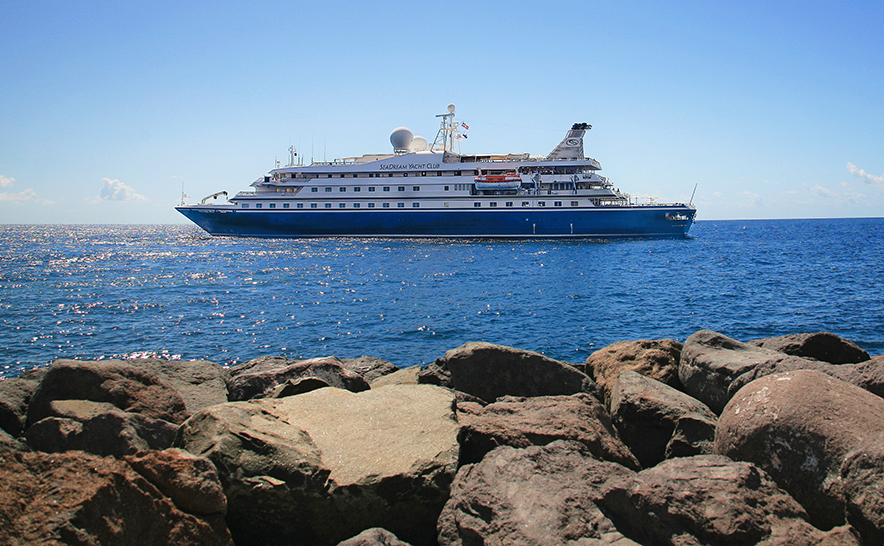
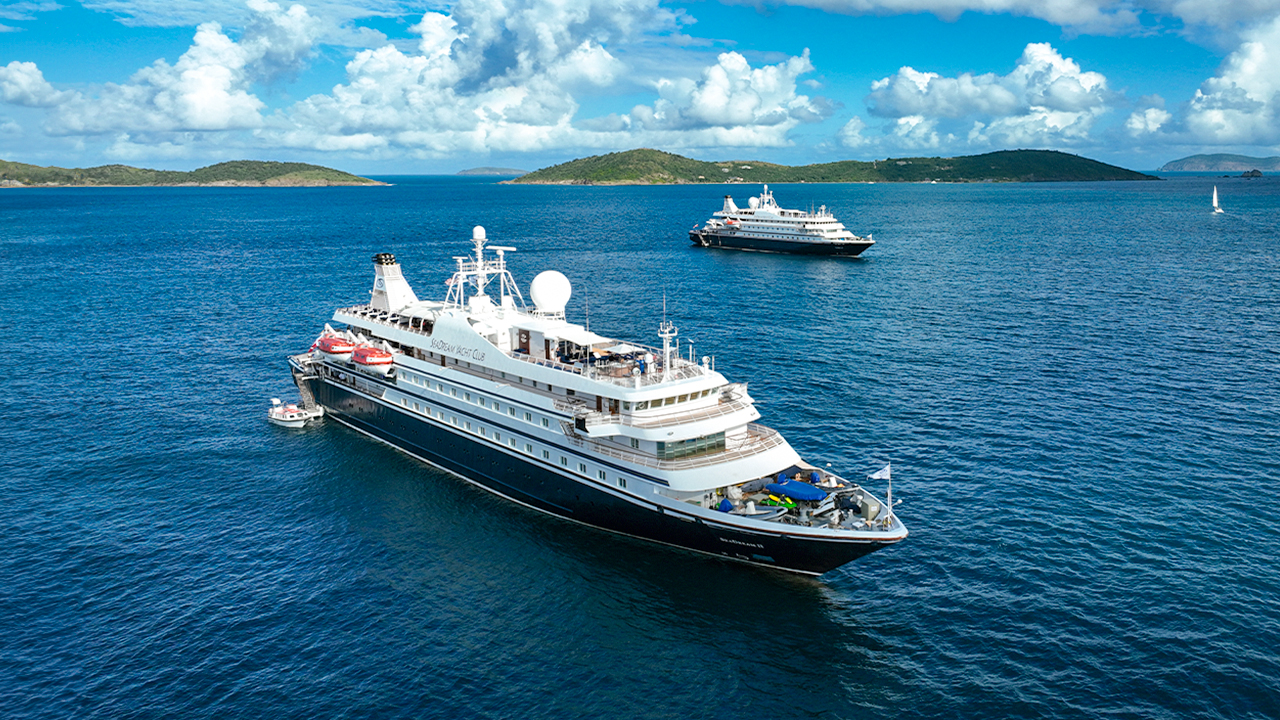
More details about the suites and staterooms aboard SeaDream III
will be announced soon. In the meantime, our reservations team would be happy to
help you reserve your voyage.